Rimella

Edited by:
Maria Grazia Schiapparelli
Introduction
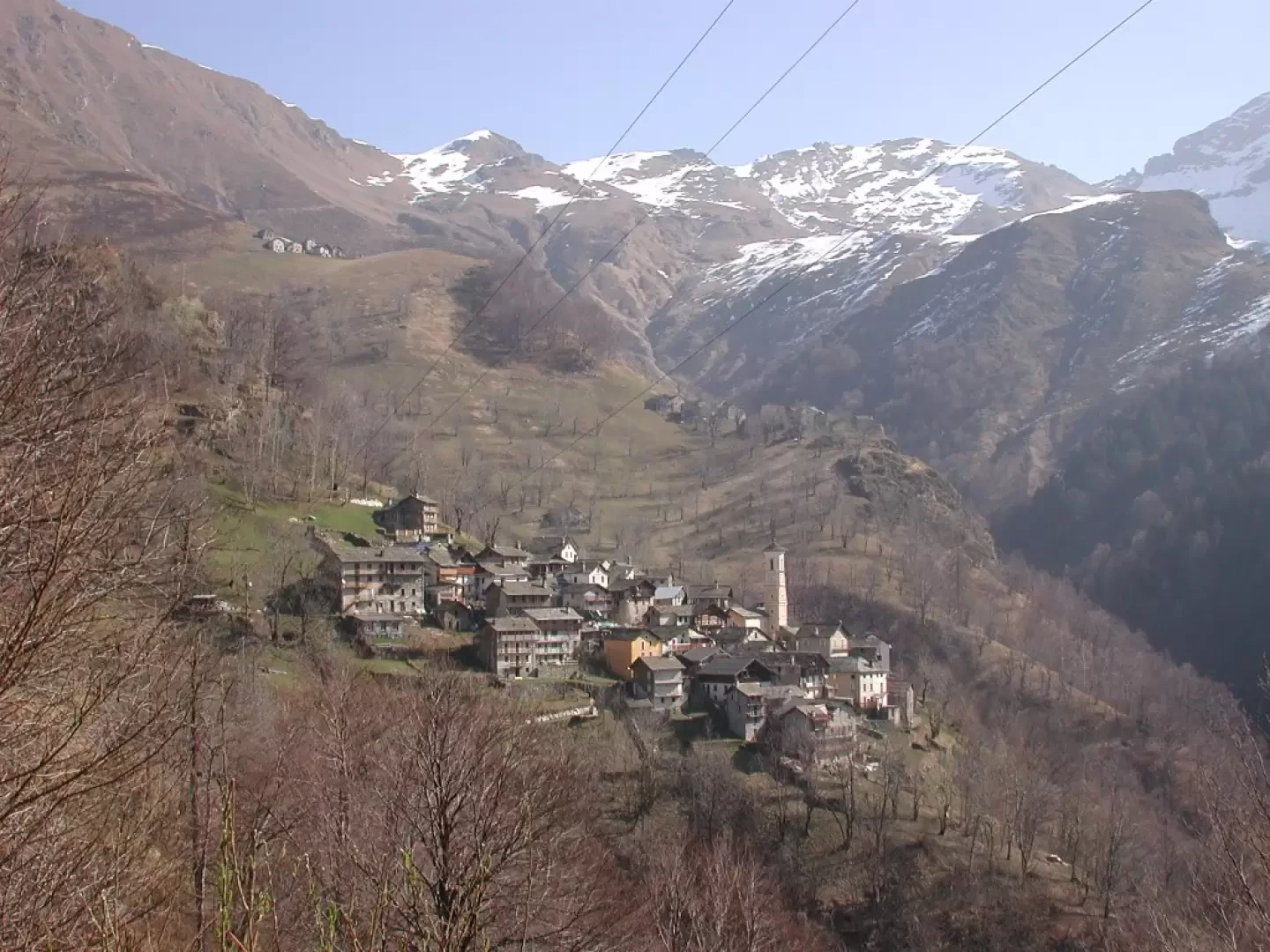
Rimella is a village in the Mastallone valley, founded by Walser populations in the 13th century. The Walser (from the German Walliser, i.e. Vallesano) are a population of Germanic origin who immigrated from the Berne area into the Valais in the 8th century, and from there into the Italian valleys around Monte Rosa, into Switzerland, Austria, Liechtenstein and France from 1200 onwards, the year in which we find the first official documents relating to authorisations to settle in the area.Description
Information sheet
Area: 26.27 sq km
Altitude: 1176m
Maximum elevation:Mount Capezzone (2421m)
Number of inhabitants: 133
Name in dialect: Remmalju (Walser) - Rimela (Piedmontese)
Inhabitants' name: Rimellesi
Patron Saint: St Michael (29 September)
Website: www.comune.rimella.vc.en
Webcam:
Bordering municipalities: Bannio Anzino, Calasca-Castiglione, Cravagliana, Fobello, Valstronal
Villages and hamlets: Church (zar Chiljchu), Grondo (Grund), Pianello (en d Aggu), Prati (en Matte), Riva (Rivu), Roncaccio Inferiore (en du Nidru), Roncaccio Superiore (en dun Obru), San Gottardo (Rund), Sant'Anna (Tossu), Sant'Antonio (zum Gràziànu), Sella (d Ŝchàttàl), Villa Inferiore (Nìder Dörf), Villa Superiore (Ober Dörf)
Landscapes:
Description
Rimella is a village in the Mastallone valley, founded by Walser peoples in the 13th century. The Walser (from the German Walliser, i.e. Vallesano) are a population of Germanic origin who immigrated from the Bern area to the Valais in the 8th century, and from there to the Italian valleys around Monte Rosa, Switzerland, Austria, Liechtenstein, France from 1200 onwards, the year in which we find the first official documents relating to authorisations to settle in the territory.
They brought their culture, their skills as builders, their traditions and their language, a German dialect still spoken in their communities today. This immigration in the 13th century was brought about by a number of causes: the overpopulation of the Valais, a particularly favourable climatic period that allowed settlements even in the mountains at high altitudes, special concessions by large monastic institutions and feudal lords to favour the colonisation of certain Valsesian areas. To understand the importance of Rimella in the past, just one fact: in 1871 its population was 1327, in 2001, 142, now it is much less, and even here the Tuttschu, the ancient German dialect, is still spoken. To reach Rimella, one enters Val Mastallone and immediately encounters the Gula bridge, a bold artefact 45 metres above the stream, which is well worth a stop. The territory of Rimella is irregular, rich in peaks, including Pizzo Tignaga, Cima Capezzone, and Massone; it borders the Strona valley and the Anzasca valley, which runs from Macugnaga to Piedimulera, has streams embedded in narrow gorges, and as soon as the terrain becomes less steep, it is home to many small settlements. Its two main valleys, the 7-km-long Landwasser, running north-south, and the 4-km-long Ender or Anderwasser, running east-west, join at the little chapel of the Líebu Frouwa tsum Schteg (in Italian, 'Madonna del Rumore'), which can be considered the gateway to the valley; the road once passed under a portico in front of the church; on the wall of the chapel, one can read the prayer that emigrants recited when they left the valley: Hail beloved homeland! On this day we depart from you. Deh! Merciful Virgin protect our people and us until our return'. Even today, the road from this point onwards, although widened, gives a good idea of what it must have been like to reach Rimella in times gone by. The Walser settlement along the Rimella valleys was certainly motivated by the exploitation of the great ecclesiastical and secular heritages at high altitudes; it was favoured by the chapter of the Canons of San Giulio, the Benedictine monastery of San Graciniano in Arona and the Counts of Biandrate, who already had interests in Salecchio. The first documents (ancient parchments found in the archives of Orta San Giulio) testify to the allocation of land to three families by the chapter of the Canons of Orta San Giulio, and date back to 1256; the families had settled the year before in S Rund, San Gottardo; There follows a whole series of documents concerning the vicissitudes of the community, starting with the cattle raids, which at that time were a real ruin, to the tormented relations with the chapter of San Giulio, and the authorisation to build one or more mills, which remained in operation until the 1930s/40s. The first settlers apparently arrived from Devero and Simplon, travelling up the Strona valley to settle in Campello Monti and from there to Rimella. The original houses were mostly made of wood, and over the centuries entire hamlets were destroyed by a series of fires, the last one in 1853, after which the houses were rebuilt in stone. It is worth remembering that before the 16th century, the dead had to be buried in their own church, so those who died in winter at Campello Monti, on the north side of the Stronerfurku, were frozen under the snow so that they could only be buried at Rimella when the Colma hill was cleared; with the consecration of the Campello Monti cemetery in 1551, this practice was avoided, then Campello at the end of the 16th century was annexed to the Strona valley. Rimella in the period between 1500 and 1700 was the birthplace of many men of letters, notaries, lawyers, doctors, veterinarians, chemists, pharmacists, captains, engineers, writers, painters and sculptors; education was highly valued. A part of the emigrants' remittances was destined to support the expenses for the chaplain, who, in addition to having religious duties, had to teach reading and writing between 29 September and the kalends of May, despite the fact that it was more difficult to reach the school at that time because of the snow, so that the people of Rimella could read, keep accounts, and also communicate with their emigrant relatives. There is an active Walser community in Rimella, which keeps traditions alive, and a museum, consisting of the initial donation of Filippa, who lived at the turn of the 18th century.