Grand Masun

Edited by:
Massimo Martini
Introduction
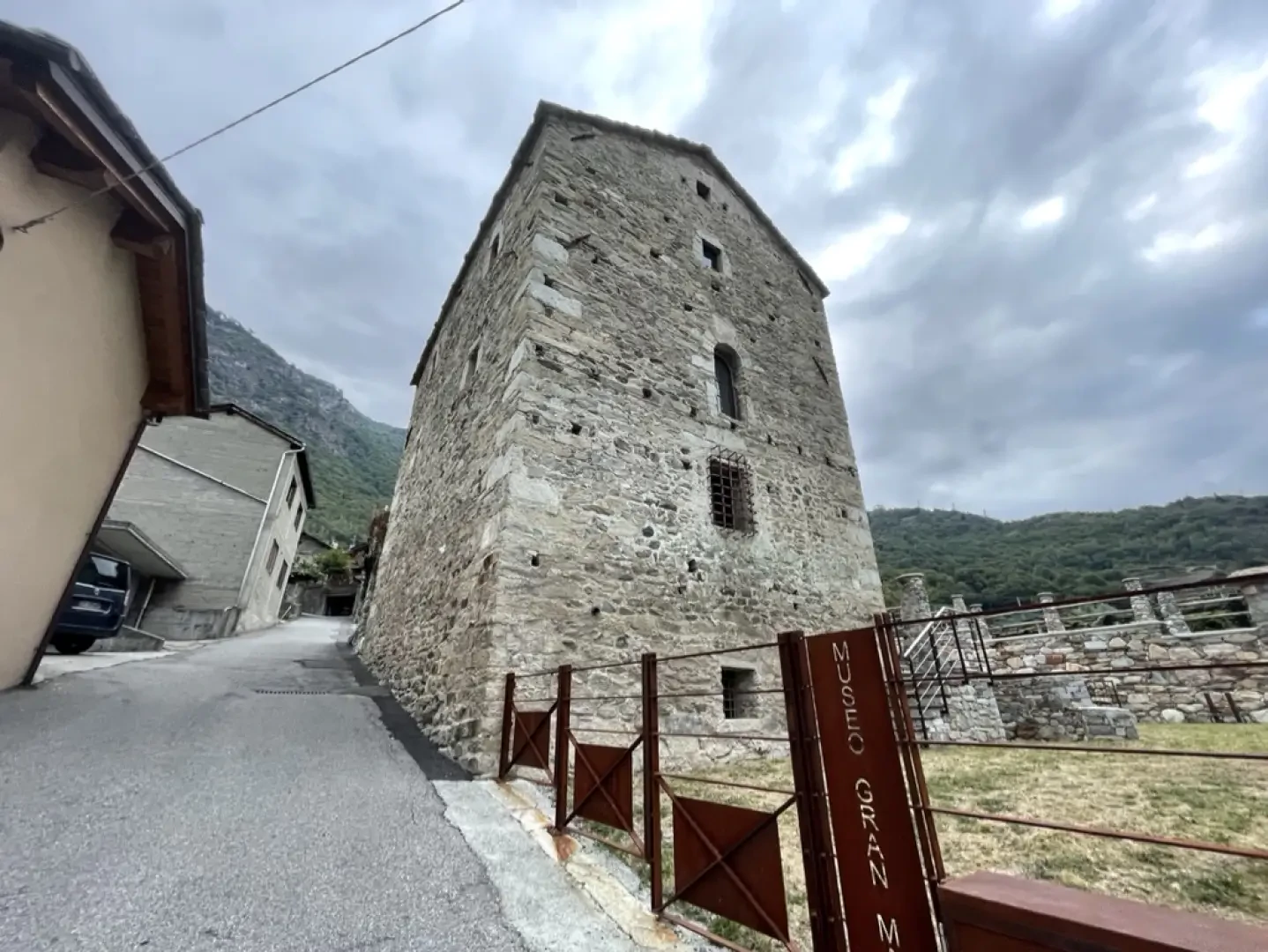
The Gran Masun in Carema is an imposing, parallelepiped building on several floors, a unique and fascinating example of a medieval fortified house. The most recent dendrochronological analyses, based on the study of the wooden remains, have allowed us to date its construction between 1404 and 1405, offering an important testimony to the history and building techniques of the period.
Description
The structure is distinguished by its construction system, characterised by the use of local stones, including gneiss and jadeite, from quarries in the surrounding area. The building also has very interesting architectural elements: on the west façade, on the first floor, there was a projecting wooden structure, while the opposite façade housed a latrine, an unusual detail that underlines the attention paid to the functional use of space.
The masonry techniques used in the construction of Gran Masun, such as the insertion of 'herringbone' masonry sections, link it to other typical constructions of the Upper Canavese, attributed to itinerant craftsmen of the time. These craftsmen were probably specialised in the construction of casetorri and fortifications, bringing their knowledge to various locations in the region.
Indoors, the main floor of the Gran Masun reveals traces of past opulence. It was embellished with a tall fireplace, a symbol of status and domestic centrality, and a large window with built-in seats, closed by a grill, which provided light and security. In the basement, since its construction, there has been a space for storing wine, confirming the deep connection of the area with wine production. This function testifies to the centrality of Gran Masun not only as a place of residence, but also as the fulcrum of a vital economic activity for Carema.
The position of Gran Masun is equally significant: the building stands at the median point of a vast territorial complex linked to the Castruzzone seigniory. It was not just a residential structure, but represented a symbol of the territorial and jurisdictional power of its owners. Its bulk, combined with its practical function and symbolic value, made the Gran Masun an authentic emblem of dominion and prestige.
Today, the Gran Masun continues to tell, through its stones and architecture, the story of a community rooted in tradition and material culture, offering a privileged glimpse into the past of Carema and the Canavese.