Bolivia
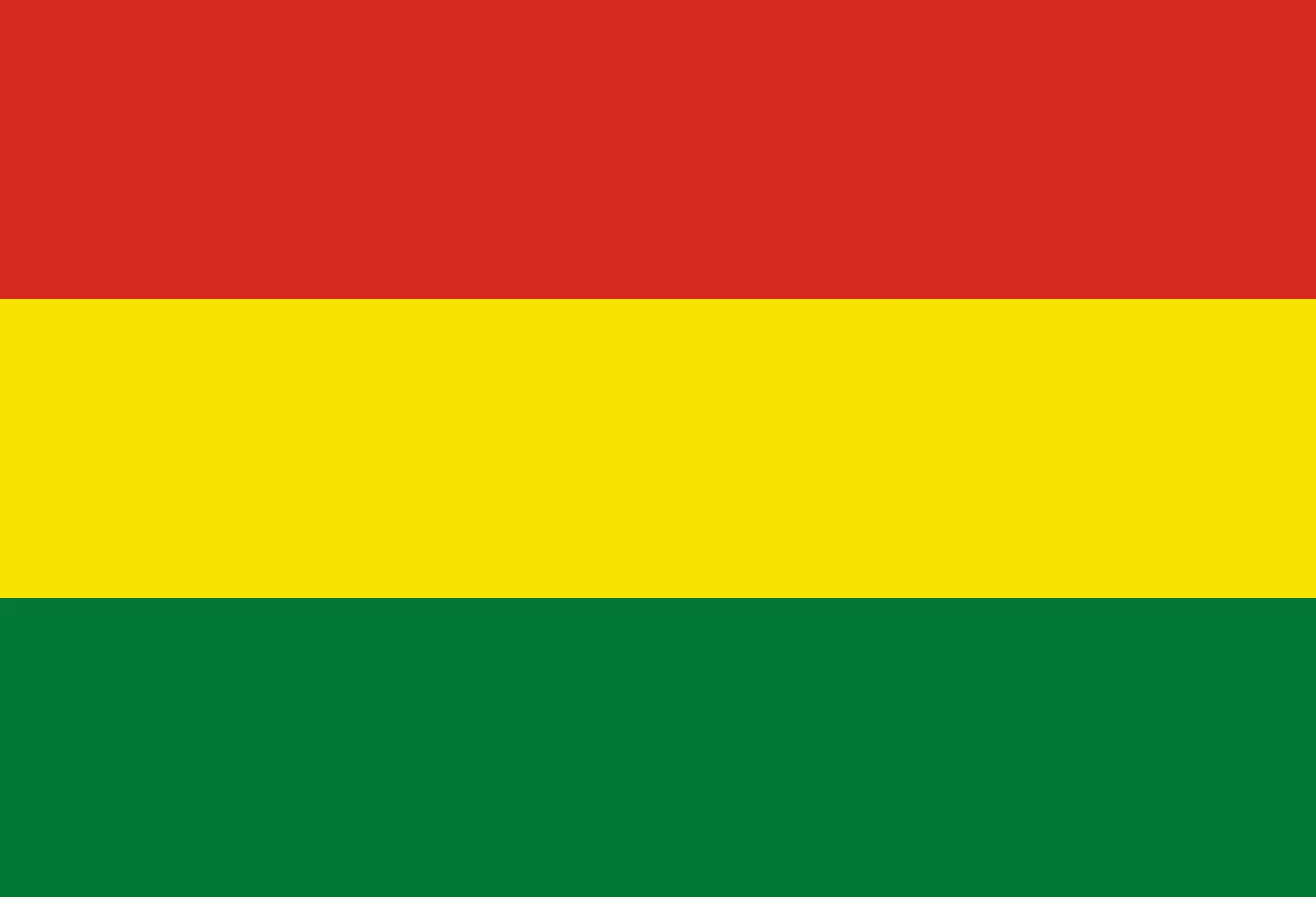

Edited by:
Massimo Martini
Access
Bolivia can be reached from Europe by air with stopovers in the United States or South American cities, to the El Alto International Airport in La Paz - located 4,061m above sea level, it is one of the highest international airports in the world - or to the Viru Viru Airport in Santa Cruz de la Sierra, at a lower altitude. Acclimatisation to the altitude is mandatory before any physical activity; La Paz and El Alto are among the highest cities in the world. Overland, the borders are with Peru (Copacabana-Yunguyo, Desaguadero), Chile (Tambo Quemado-Chungará, Pisiga-Colchane), Argentina (La Quiaca-Villazón), Brazil (Cobija-Brasiléia) and Paraguay (San Matías). Bolivia has been landlocked since 1879, when the Atacama region was ceded to Chile after the Pacific War. Internal transport is mainly by bus on often unpaved and winding roads; some smaller cities are reached by small planes. The railway system is very limited.
Introduction
Bolivia is a landlocked state in the heart of South America, bordering Peru and Chile to the west, Argentina and Paraguay to the south and Brazil to the east. The territory is structured between the Andean Altiplano in the west - one of the largest and highest plateaus in the world, between 3,500m and 4,000m - and the tropical forests of the tierras bajas in the east. Bolivia is home to Lake Titicaca, the world's highest navigable lake at 3,810m, shared with Peru and sacred to pre-Inca and Inca civilisations. The Salar de Uyuni, in the southwest at 3,656m, is the largest expanse of salt on the planet at over 10,582 km²; it reflects the sky like a mirror during the rainy season. Nevado Sajama (6,542m), an extinct volcano in the park of the same name on the Chilean border, is the highest peak in Bolivia.
Description
Bolivian morphology is dominated by the Altiplano, an immense plateau at an average altitude of 3,700m between the two Cordillerae of the Andes - Western and Eastern - stretching from Peru to Argentina for over 1,000 km. The Altiplano is home to La Paz, the highest government capital in the world at 3,640m (with the conurbation municipality of El Alto at 4,080m), Lake Titicaca and the Salar de Uyuni. The Cordillera Occidental, bordering Chile, is home to high altitude volcanoes including Sajama (6,542m), Parinacota (6,348m, bordering Chile) and Uturuncu (6,008m); the latter shows signs of recent volcanic activity. The Cordillera Oriental or Cordillera Real, above La Paz, concentrates prominent alpine peaks such as the Illimani (6,438m) - which dominates the panorama of La Paz - the Huayna Potosí (6,088m), one of the country's most popular mountaineering destinations, and the Illampu (6,368m). To the east of the Altiplano, the Yungas are humid subtropical valleys of remarkable biodiversity; further east are the tierras bajas of the Amazon and Chaco.
Pre-Columbian Bolivian history is linked to the Tiwanaku civilisation (100 BC - 1200 AD), with its ceremonial centre on Lake Titicaca, then to the Inca Empire, which incorporated the territory as Collasuyu. The Spanish conquest led to the exploitation of the Potosí silver mines, whose production in the 17th and 18th centuries largely financed the European economy of the period. Potosí was in 1600 one of the most populous cities in the world. Independence was declared in 1825, with the country named after Simón Bolívar. The Bolivian 20th century was marked by the Chaco War with Paraguay (1932-1935), the revolution of 1952 that brought the nationalisation of the mines, the assassination of Ernesto "Che" Guevara in 1967 in the eastern forests of Santa Cruz, and the long series of military regimes followed by a democratic transition that was consolidated in the 1980s.
The Bolivian economy is among the poorest in South America but has experienced strong growth from 2005 to 2020, supported by the nationalisation of natural resources: natural gas (Bolivia has the third largest reserves in Latin America), lithium (the Salar de Uyuni contains between 50% and 70% of the world reserves), zinc, silver and tin. Agriculture produces quinoa, potatoes, maize and cacao in the Yungas and tropical areas. Bolivian cuisine centres on salteña (a hot empanada filled with stew), sopa de maní, llajwa (a spicy tomato and locoto sauce) and llama and alpaca meat.
The Parque Nacional Sajama, established in 1939, is the oldest in Bolivia and protects the snow-capped cone of Sajama around a plateau landscape with vicuña (Vicugna vicugna), rhea (Rhea pennata) and flamingos (Phoenicoparrus spp.) in the surrounding lagoons. Parque Nacional Madidi, in the northern Yungas, is considered one of the most biodiverse parks on the planet with over 1,000 species of birds. The Parque Nacional Noel Kempff Mercado (UNESCO 2000) in eastern Bolivia protects a vast area of savannah, forest and tepuis in the Guianic Shield region. The fauna of the Bolivian Andes includes the llama (Lama glama), alpaca (Vicugna pacos), vicuña (Vicugna vicugna), Andean condor (Vultur gryphus) and viscaccio (Lagidium viscacia).
Bolivian mountaineering focuses on the Cordillera Real above La Paz. The Huayna Potosí (6,088m) is the most popular 6,000m peak in the world due to the relative ease of access from La Paz and the availability of refuges at 5,130m; the normal route on ice requires a night in a refuge and about 4-6 hours of climbing. Nevado Sajama (6,542m) can be reached in 2-3 days from the pueblo of the same name on ice and snow. L'Illimani (6,438m), "Father Illimani" in the local story, was first climbed in 1898 by W.M. Conway. Chearoco (6,127m) and Tuni-Condoriri are technical destinations for experienced mountaineers. The natural acclimatisation zone of the Altiplano - with La Paz at 3,640m and El Alto at 4,080m - makes Bolivia a privileged starting point for approaching 6,000m.
Bolivian trekking has some valuable historical routes. The Choro Trail, from La Cumbre (4,800m) above La Paz to the Yungas of Coroico (1,100m), is a three-day Inca Trail that descends over 3,000m in altitude through very diverse ecosystems. The Takesi Trail is a similar variant. The Salar de Uyuni Tour is the country's most popular circuit, completed by 4x4 in 3 days through the salt flats, colourful lagoons and geysers of the sur lípez. Bolivian trail running includes the Bolivia Ultra Race and routes on the volcanoes of the Altiplano.
Information
General Data
Constitutional capital: Sucre (Government capital: La Paz)
Area: 1.098,581 km²
Minimum elevation: 70m (Río Paraguay, border with Paraguay)
Maximum elevation: 6,542m - Nevado Sajama [to be verified slug]
Number of inhabitants: 12.079,000 (estimates 2022)
Official name: Estado Plurinacional de Bolivia
Name of inhabitants: Bolivians
Border countries: Peru - Chile - Argentina - Paraguay - Brazil
Institutional website: https://www.bolivia.gob.bo