Argentina
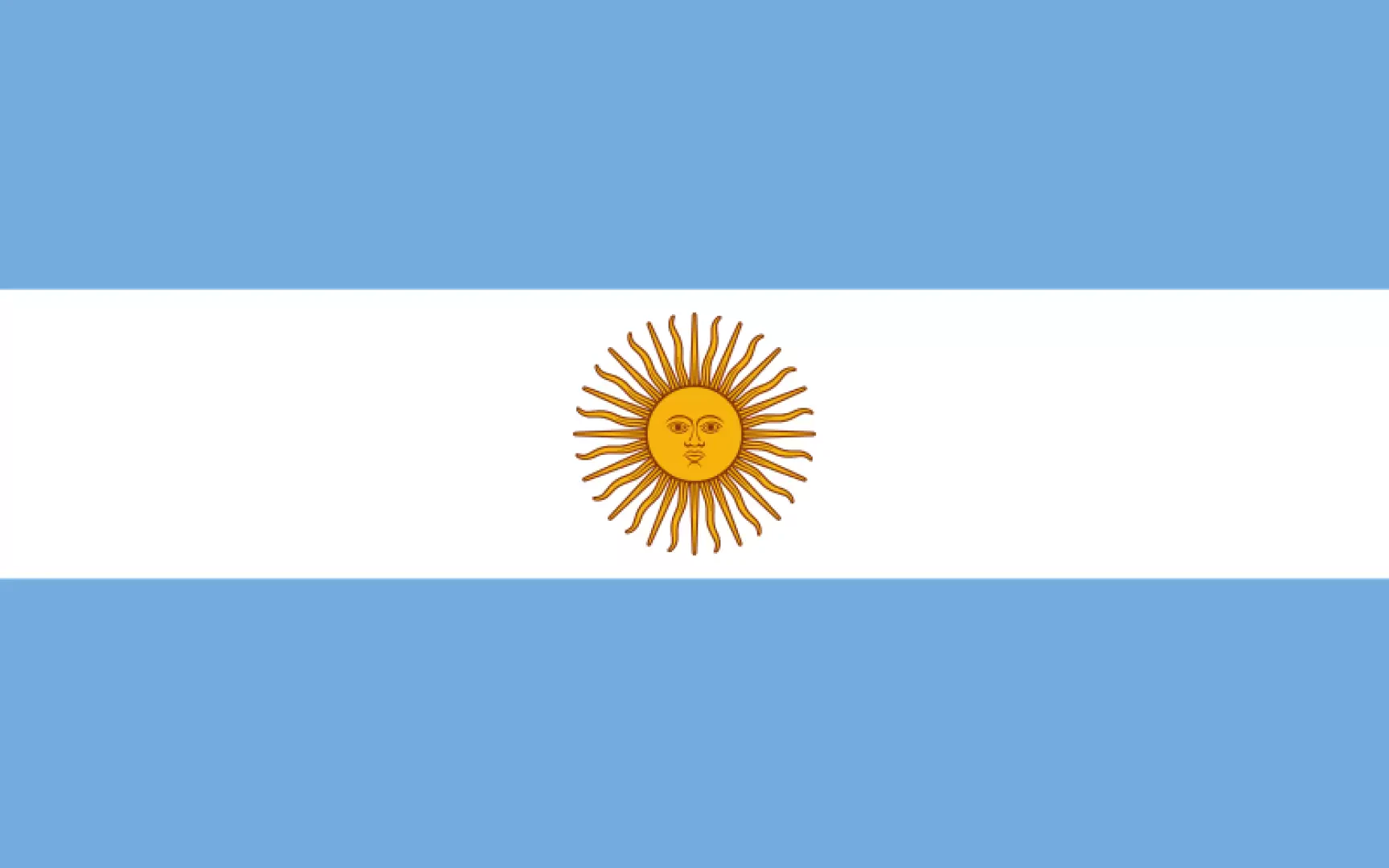

Edited by:
Massimo Martini
Access
Argentina can be reached from Europe by air with direct flights from Madrid, Rome, Milan and London to the Ministro Pistarini International Airport (Ezeiza) in Buenos Aires, and with a stopover at the Jorge Newbery Airport (Aeroparque) for internal flights. Regional airports serve Mendoza (access to Aconcagua), Bariloche (northern Patagonia), El Calafate (Los Glaciares and Perito Moreno), Ushuaia (Tierra del Fuego) and Neuquén (Lanín area). The road network is developed in the inhabited areas; towards Southern Patagonia the distances become enormous and many roads are unpaved. Ruta Nacional 3 is the longest in Argentina, from Buenos Aires to Tierra del Fuego. The Ruta de los Siete Lagos connects Bariloche to San Martín de los Andes via Patagonian national parks. Long-distance internal transport is mainly by bus (colectivos). The railway is limited. For Aconcagua, the entry point is Mendoza; the Aconcagua Provincial Park is about 180 km from the city.
.Introduction
Argentina is the second largest country in South America and the third largest in the entire American continent. It stretches over 3,700 km in latitude, from the subtropics in the north to Tierra del Fuego in the south, encompassing an exceptional morphological variety: the western Andes with Aconcagua (6.962m, the highest peak in the Americas and the Western Hemisphere), the great flat pampas of the centre, Patagonia with its glaciers and steppes, the subtropical Mesopotamia of the north-east with Iguazú Falls, and Tierra del Fuego with the Beagle Channel. It borders Bolivia and Paraguay to the north, Brazil to the northeast, Uruguay to the east and Chile to the west along the Andean ridge. Argentine culture, profoundly influenced by European immigration - especially Italian and Spanish - has produced artistic expressions of global significance, from the tango to the letters of Borges.
Description
Argentina's territory is divided into large, distinct geographical regions. The Andes, which form the natural border with Chile for over 5,000 km, reach their highest altitude with Aconcagua (6,962m) in the province of Mendoza, the only peak in the Americas above 6,900m. To the south, Andean Patagonia is home to the glacial lakes of Bariloche, the volcanic structure of Lanín (3,776m) and the granite towers of Cerro Fitz Roy (3,405m) and Cerro Torre (3,102m) in the Parque Nacional Los Glaciares, icons of world mountaineering. The Perito Moreno glacier, one of the few still advancing glaciers in the world, descends into the Lago Argentino dropping ice fronts 60m high. The pampas, fertile plains surrounding Buenos Aires, are the heart of Argentine agriculture. The northern Chaco is a dry subtropical forest. The north-eastern Mesopotamia, between the Paraná and Uruguay rivers, is home to the Iguazú Falls, with 275 waterfalls on 2.7 km of frontage - inscribed in UNESCO in 1984.
The Argentine territory was inhabited by different peoples: Tehuelche and Mapuche in Patagonia, Quechua and Aymara in the north-west, Guaraní in the north-east. Spanish colonisation began in the 16th century; Buenos Aires was finally founded in 1580. The revolution of 25 May 1810 was the starting point of the independence process, which was formally declared on 9 July 1816 in Tucumán. Between 1870 and 1930 Argentina experienced some of the fastest economic growth in the world, fuelled by European immigration and meat and grain exports; Buenos Aires was nicknamed the "Paris of the South". Argentina's 20th century was marked by cycles of crises and economic booms, repeated military coups - with the 1976-1983 dictatorship responsible for the "disappearance" of 30,000 people - and the return to democracy in 1983.
Argentina's economy is based on agro-industry (the world's leading exporter of soya, second of maize), cattle breeding (Argentine meat is considered among the best in the world), energy and tourism. The province of Mendoza is the country's main wine-growing centre, with Malbec as the grape variety that symbolises Argentina in the world. Buenos Aires hosts a cultural scene of international standing, with theatres, museums, fashion and gastronomy. The tango - listed as a UNESCO World Heritage Site in 2009 - is the most recognisable cultural expression.
Argentina's national park system covers about 8% of its territory. The Parque Nacional Los Glaciares (UNESCO 1981), in Santa Cruz, is the main mountaineering destination in Patagonia: Cerro Fitz Roy was first climbed in 1952 by Lionel Terray and Guido Magnone; Cerro Torre was the scene of controversial ascents (Cesare Maestri in 1959, then in 1970 with a drill) and the first clean ascent (Ermanno Salvaterra, Alessandro Beltrami, Giacomo Rossetti in 2005). The Nahuel Huapi National Park near Bariloche is the oldest in Argentina (1934) and offers trekking and skiing around Andean glacial lakes. Fauna includes the guanaco (Lama guanicoe), puma (Puma concolor), Andean condor (Vultur gryphus), southern whale (Eubalaena australis) on the Valdés Peninsula (UNESCO 1999) and Magellanic penguins (Spheniscus magellanicus) in Patagonia.
The Aconcagua Provincial Park in the province of Mendoza is the most popular mountaineering destination in South America and one of the classic destinations in the Seven Summits programme. Aconcagua (6,962m) was first climbed in 1897 by the Swiss guide Matthias Zurbriggen, who was operating from Macugnaga; since then it has become one of the most frequented 6,000m peaks in the world, with the Normal route on the north-east face accessible to high-altitude hikers with good physical condition. The south face, on the other hand, is a high-level mountaineering challenge, with an altitude difference of almost 3,000m. Parque Nacional Los Glaciares hosts the famous W trek and the Chalten Circuit around Fitz Roy and Cerro Torre; the trek to the Fitz Roy Base Camp from El Chaltén is accessible without equipment. The Parque Nacional Lanín offers volcanic ascents to Lanín (3,776m) and trekking on the Pehuén Trail.
Argentinean trail running has events of international significance. The Ultra Trail Cordón del Plata, near Mendoza, offers routes from 35 to 115 km in the foothills of the Andes at altitudes between 2,000m and 4,700m. The Patagonia Run, in San Martín de los Andes, takes place in the Parque Nacional Lanín with distances from 21 to 100 km. The Ultra Cerro del Plata is a high-level vertical race. The Maratona de los Glaciares, in El Calafate, is run in Los Glaciares Park. The Ushuaia 100K crosses Tierra del Fuego through lenga forests and sub-Antarctic landscapes.
.Information
General Data
Capital: Buenos Aires
Area: 2.780,400 km²
Minimum elevation: -105m (Laguna del Carbón, Patagonia)
Maximum elevation: 6,962m - Aconcagua
Number of inhabitants: 45,376.000 (2022 census)
Official name: República Argentina
Name of inhabitants: Argentines
Provinces: 23 provinces + Autonomous City of Buenos Aires
Bordering countries: Chile - Bolivia - Paraguay - Brazil - Uruguay
Institutional website: https://www.argentina.gob.ar
Points of interest
Territory
Magazine
Itineraries
Itineraries by activity
Collections
American countries | list - map
World countries | list - map