Antey-Saint-André

Edited by:
Massimo Martini
Access
Antey-Saint-André can be reached via the motorway Turin-Aosta, with the recommended exit at Châtillon-Saint-Vincent. From the exit, continue along the regional road in the direction of Valtournenche, which crosses the municipal territory. The reference railway station is Châtillon, located on the Turin-Aosta railway line. From here, there are road connections to Valtournenche, operated by the regional public transport service. The railway connection is currently operated by regional trains. The nearest airports are Turin-Caselle Airport and Milan-Malpensa Airport, from which it is possible to continue by road or rail to Valle d'Aosta.
The main road network is maintained regularly even during the winter season; possible criticalities may occur in the event of heavy snowfall, particularly along the secondary branches towards the higher hamlets.
Introduction
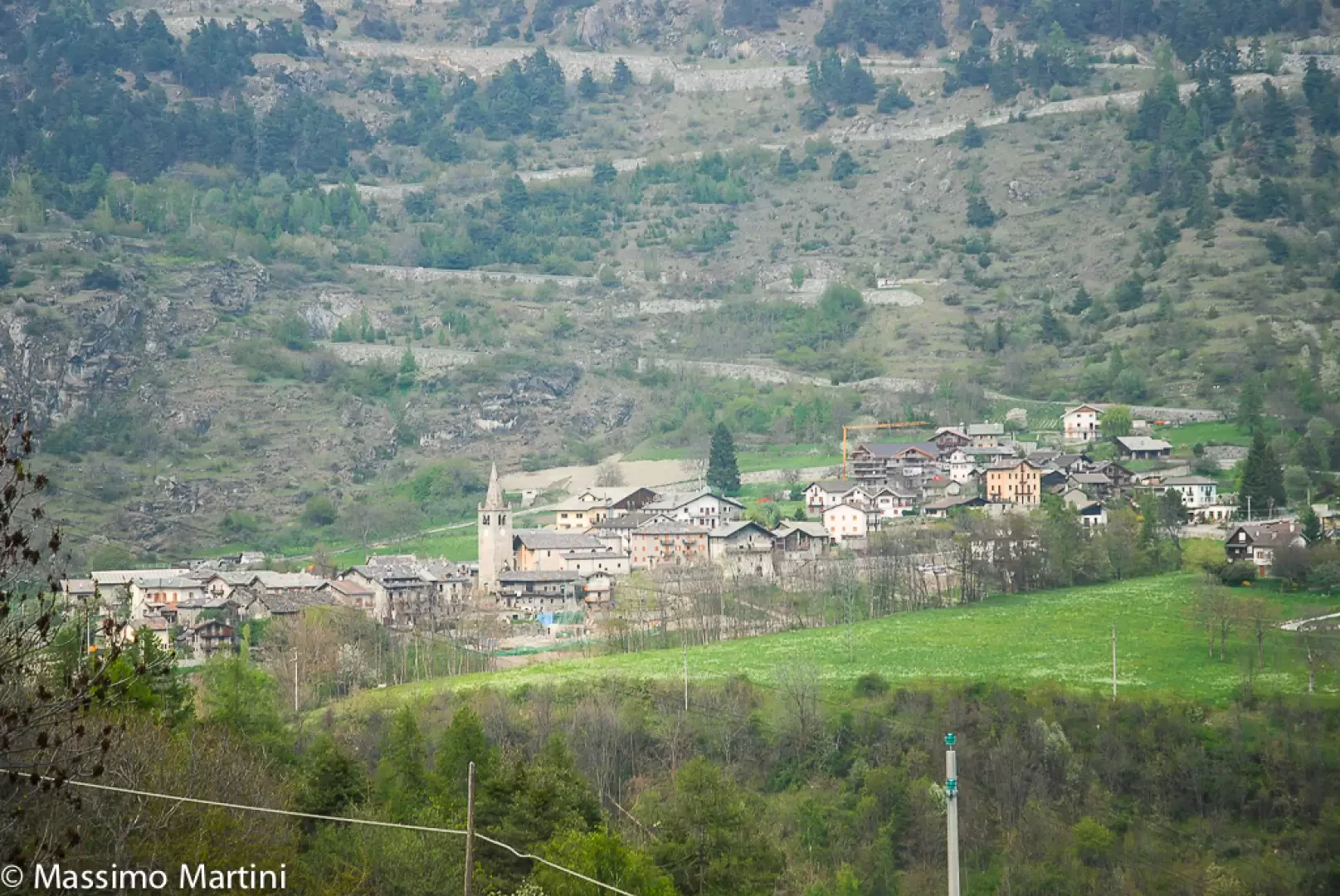
Antey-Saint-André is a municipality in Valle d'Aosta located at the entrance to Valtournenche, along the left orographic side of the Dora Baltea river. The main town is located at an altitude of 1,074 metres, on a wide morphological terrace that marks the transition between the lower central valley and the valley leading to the Matterhorn massif. Its position, open and relatively flat with respect to the surrounding slopes, has favoured over time the stable settlement and development of an inhabited centre divided into numerous hamlets.
Historically linked to the feudal events of the valley, in particular to the Challant seigniory and later to Savoy control, the territory retains traces of its traditional rural organisation. An element of identity of the municipality is its function as a gateway to Valtournenche, with a widespread settlement pattern and a consolidated vocation for hospitality and outdoor activities.
Description
The municipal territory extends over a small but morphologically varied area, between the valley floor and the wooded slopes that rise towards the mountains of Torgnon, La Magdeleine and Chamois. The geomorphological structure is characterised by conoids and alluvial terraces shaped by the action of the Dora Baltea and lateral streams. The slopes are home to mixed deciduous and coniferous forests, while the higher altitudes are occupied by pastures and mountain pastures.
The most significant natural features include Lake Lod, a small basin located upstream of the main town, in a context of peat bogs and wet meadows of naturalistic interest. The area constitutes a transitional environment between the valley floor and the higher slopes of Valtournenche, with a biodiversity linked to the presence of alpine wetlands.
The settlement is divided into numerous hamlets, including Buisson, Filey, Avout and Bourg, distributed along the regional road and on the slopes. Buisson represents a strategic junction, as it is the starting point of the cable car to Chamois, the only Italian municipality that cannot be reached by car. The historical organisation of the territory reflects an agro-pastoral economy based on cattle breeding, subsistence farming and forest exploitation.
The origins of the settlement are documented by archaeological finds in the Navillod locality. In the Middle Ages, the territory was part of the Challant domains, particularly the branch of the Lords of Cly, and later integrated into the Savoy administrative structure. The land structure and the distribution of the hamlets testify to a long continuity of settlement.
Alongside traditional agricultural activities, wood craftsmanship has been a significant component of the local economy, with the production of tools, sabots and artefacts linked to rural life. During the 20th century and especially in recent decades, the municipality has consolidated a residential and tourist function, linked to its position along the Valtournenche axis and to the presence of sports and accommodation facilities.
In terms of hiking, Antey-Saint-André is a starting point for itineraries that connect the valley floor to the municipalities of La Magdeleine, Torgnon and Chamois, as well as routes that go up to mountain pastures and panoramic ridges. The footpath network integrates with that of Valtournenche, offering links to lateral passes and valleys and allowing crossings to neighbouring territories.
Information
Area: 11.68 sq. km
Altitude: 1,074m
Maximum elevation: 2,112m - Bois de Supplin
Number of inhabitants: 557 (as of 31.12.20)
Name in dialect: Antéy
Inhabitants name: Antesans - Antesan, Antesane
Patron Saint: St. Andrew the Apostle (30 November)
Neighbouring municipalities: Chamois, Châtillon, La Magdeleine, Saint-Denis, Torgnon, Valtournenche
Website: www.comune.antey-st-andre.ao.en
Points of interest
Main points of interest
- Church of St Andrew the Apostle
- Lac de Lod
Explore by type
- places of worship (2) - map
- villages (2) - map
- lakes (1) - map
Itineraries
Main Routes
- Ru de Liès
- Lac de Lod
Explore by type
- hiking (18) - map
- mountain-bike (1) - map