Albania

Edited by:
Massimo Martini
Access
Albania can be reached from Italy mainly by sea, with ferries connecting the ports of Bari, Brindisi and Ancona with Durrës, the country's main port, and with smaller routes to Vlora and Saranda. The Bari-Durrës crossing takes about 8-9 hours. The overland connection from central Europe is via Serbia, Kosovo or Montenegro, along state roads through the Balkans; there are no direct international motorways from Italy. Tirana's Mother Teresa International Airport (TIA), located about 17 km from the capital, is the country's main air terminal and connects Albania to several European destinations; a second airport, Kukës in the north, serves some regional routes. Albania's motorway network is being developed: the SH2 connects Tirana to Durrës and the SH4 continues to Vlora, while the Arbër (Rruga and Arbrit) motorway, still under completion, will improve connections with northern Macedonia. In the rural and mountainous areas of the north, many roads are unpaved or in poor condition and require vehicles with appropriate traction. The railway network connects some major cities - Tirana, Durrës and Shkodra - but remains underdeveloped and poorly frequented by European standards. For internal travel, road transport is predominant, with an extensive network of buses and minibuses (vans) reaching towns and villages. The mountainous areas of the Albanian Alps in the north, such as the Theth and Valbona valleys, are only accessible in summer (May-October); in winter, snow blocks the passes and access requires vehicles with four-wheel drive.
Introduction
Albania is a southern and eastern European state located on the Balkan Peninsula, with coastlines bordering the Adriatic Sea to the west and the Ionian Sea to the southwest. The territory is predominantly mountainous: the Albanian Alps in the north - a southern extension of the Dinaric Alps, known locally as the Bjeshkët and Nemuna ("Cursed Mountains") - give way southwards to less elevated mountain ranges and vast plateaus, while the narrow, alluvial coastal plain takes up the western belt. The country borders Montenegro to the north, Kosovo to the northeast, North Macedonia to the east and Greece to the south. With a history rooted in Illyrian civilisation and spanning centuries of Roman, Byzantine and Ottoman domination, Albania has maintained a strong cultural identity over time, expressed in the Albanian language - an autonomous Indo-European branch with no close relatives - and in the traditions of the mountain communities. After decades of isolation under the communist regime of Enver Hoxha (1944-1985), the country began a process of democratic opening since 1991 and was granted candidate status for European Union membership in 2014. Its geographical location places it as a point of contact between Central Europe and the eastern Mediterranean, with an Adriatic coastline that separates the country from Italy by only 75 km at the narrowest point of the Otranto Channel.
Description
The Albanian territory covers an area of 28,748 km² and has an average altitude of about 708 metres. The Albanian Alps, in the north-western sector, constitute the most impervious portion of the country, with limestone peaks exceeding 2,500 metres and with Jezercës (2,694 m) as the highest point of the system. The highest mountain in the country, however, is Mount Korab (2,764 m), which rises in the eastern sector on the border with North Macedonia. In the east, in the lake region, there are three lake basins of glacial and tectonic origin shared with the neighbouring countries: Lake Ohrid, Great Prespa and Small Prespa. The western alluvial plains, drained by the main rivers - the Drin in the north, the Mat in the centre and the Seman and Vjosë in the south - are home to most of the population and agricultural activities. The Adriatic coast is about 274 km long, characterised by lagoons and wetlands; the Ionian coast, shorter but steeper, stretches for 172 km to the Greek border, with the Cerauniche mountains descending directly to the sea in the so-called Albanian Riviera.
The history of Albania is closely linked to the Illyrian civilisation, an Indo-European population that occupied these territories from the Iron Age onwards and resisted Roman expansion until the conquest in 168 BC. The territory was then included in the Eastern Roman Empire and became part of the Byzantine province system. In the Middle Ages, the principality of Arbanon (1190) represented the first documented Albanian state entity. The most famous figure in national history is George Kastrioti Scanderbeg (1405-1468), a leader who led a prolonged resistance against Ottoman expansion in the 15th century and became a symbol of Albanian identity. With Scanderbeg's death, Albania came under Ottoman control for over four centuries, during which time a large part of the population adopted Islam, now the majority denomination alongside Orthodox Christianity and Catholicism. Independence was proclaimed in 1912. After World War II, Hoxha's communist regime established one of the most closed dictatorships in Europe, with almost total international isolation and the construction of some 170,000 concrete bunkers scattered across the territory - structures that can still be seen in the landscape today. The collapse of the regime in 1991 initiated a process of democratic transition accompanied by intense migratory flows towards Italy and Greece.
The Albanian economy is mainly based on agriculture, which still employs a large part of the rural labour force, with production of olives, vines, citrus fruits, wheat and tobacco. The industrial sector, with metalworking, hydroelectric and chemical plants, has an increasing weight. Remittances from Albanians who have emigrated abroad - mainly to Italy and Greece - constitute a significant part of the economy. Tourism is booming, with the Albanian Riviera and the mountainous areas in the north as the main attractors. From a cultural point of view, the traditions of the northern mountain communities are based on an ancient, unwritten customary code, the Kanun, which has governed the social life of Alpine communities for centuries. The polyphonic music of the southern singing groups, recognised by UNESCO as an intangible heritage of humanity, is one of the most original elements of Albanian culture.
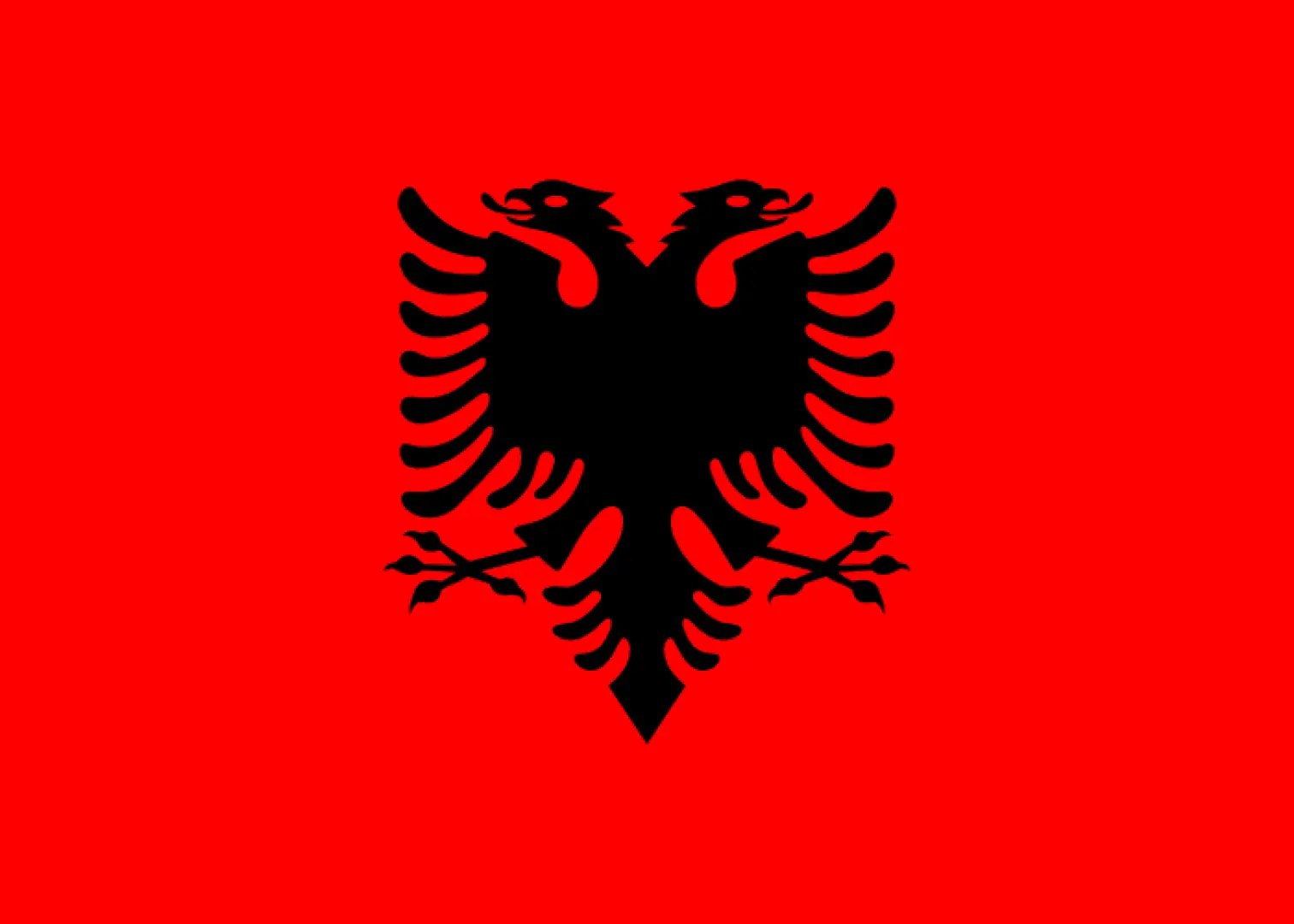
The Albanian protected area system includes 15 national parks. The Theth National Park, in the heart of the Albanian Alps, covers some 26 km² and is home to high-altitude limestone landscapes, the Grunas Waterfall, the Kulla e Ngujimit (Isolation Tower) and the endemic flower Wulfenia baldaccii, discovered here by the Italian botanist Baldacci. The Valbona National Park, with its 8,000 hectares, is dominated by the Jezercës massif and is home to forest formations of beech (Fagus sylvatica), pine and fir. The Butrinto National Park, in the south of the country, has been on the UNESCO World Heritage List since 1992 and combines a prime archaeological site - with Greek, Roman, Byzantine and Venetian remains - with a lagoon ecosystem of great biodiversity, home to flamingos, otters and over 1,200 plant species. The National Park of Llogara, on the Ionian coast, protects pine and fir forests at an altitude of over 1,000 metres overlooking the sea. Albania is home to around 30% of Europe's plant species and 42% of the continent's fauna, with 91 endangered animal and bird species, including the golden eagle (Aquila chrysaetos), the symbol of the national coat of arms, and the lynx (Lynx lynx).
Hiking in the Albanian Alps is mainly concentrated in the Theth and Valbona National Parks. The Theth-Valbona route, which crosses the Valbona pass at 1,950 m and covers approximately 18 km with an altitude difference of 1,000 m, is considered one of the best-known mountain routes in the Balkans and takes a full day to walk. The trail network is integrated into the Via Dinarica White Trail system, a long-distance trail of approximately 1,930 km that runs through Slovenia, Croatia, Bosnia and Herzegovina, Montenegro, Albania, Kosovo and North Macedonia, with the Albanian section running along the Albanian Alps. In the southern part of the country, the Llogara Park offers high-altitude trails with views of the Ionian coast, while in the region of Butrint, the archaeological site and lagoon can be explored on foot. The hiking season in the northern mountain areas extends from May to October; the valleys of Theth and Valbona are only accessible at this time.
Albania's mountaineering history is mainly linked to the Albanian Alps and the Korab massif. Jezercës (2,694 m), the highest point of the Albanian Alps and the highest peak of the Dinaric Alps, can be reached from the valley of Valbona in a demanding 10-hour hike; the ascent requires mountaineering experience and orientation on rugged terrain. Mount Korab (2,764 m), on the border with North Macedonia, is the highest peak in the country and features technically demanding ascents in mixed terrain. Rock climbing is practised on some crags in the Albanian Alps, but the mountaineering infrastructure - mountain huts, equipped routes, marked trails - is still limited by western Alpine standards. Local guides and trekking organisations are progressively structuring the offer, with operational bases in Theth, Valbona and Vlora.
Trail running in Albania is developing, with an area that offers technically interesting conditions but a still nascent race infrastructure. The Via Dinarica Ultra Trail and some local circuits active in the northern sector represent the main competitive events. The terrain of the Albanian Alps, with its limestone passes, beech forests and high-altitude plateaus, is particularly suitable for the discipline in the 1,000 to 2,500 m altitude range. The best time for high-altitude practice coincides with the hiking season, from May to October.
Information
General Data
Capital: Tirana
Area: 28.748 km²
Minimum elevation: 0m (Adriatic and Ionian coast)
Maximum elevation: 2,764m - Mount Korab
Inhabitants: 2,402.000 (2023 census)
Official name: Republika and Shqipërisë
Name of inhabitants: Albanians
Prefectures: 12
Bordering countries: Greece - Kosovo - Macedonia of the North - Montenegro
Institutional website: https://www.kryeministria.al