Afghanistan
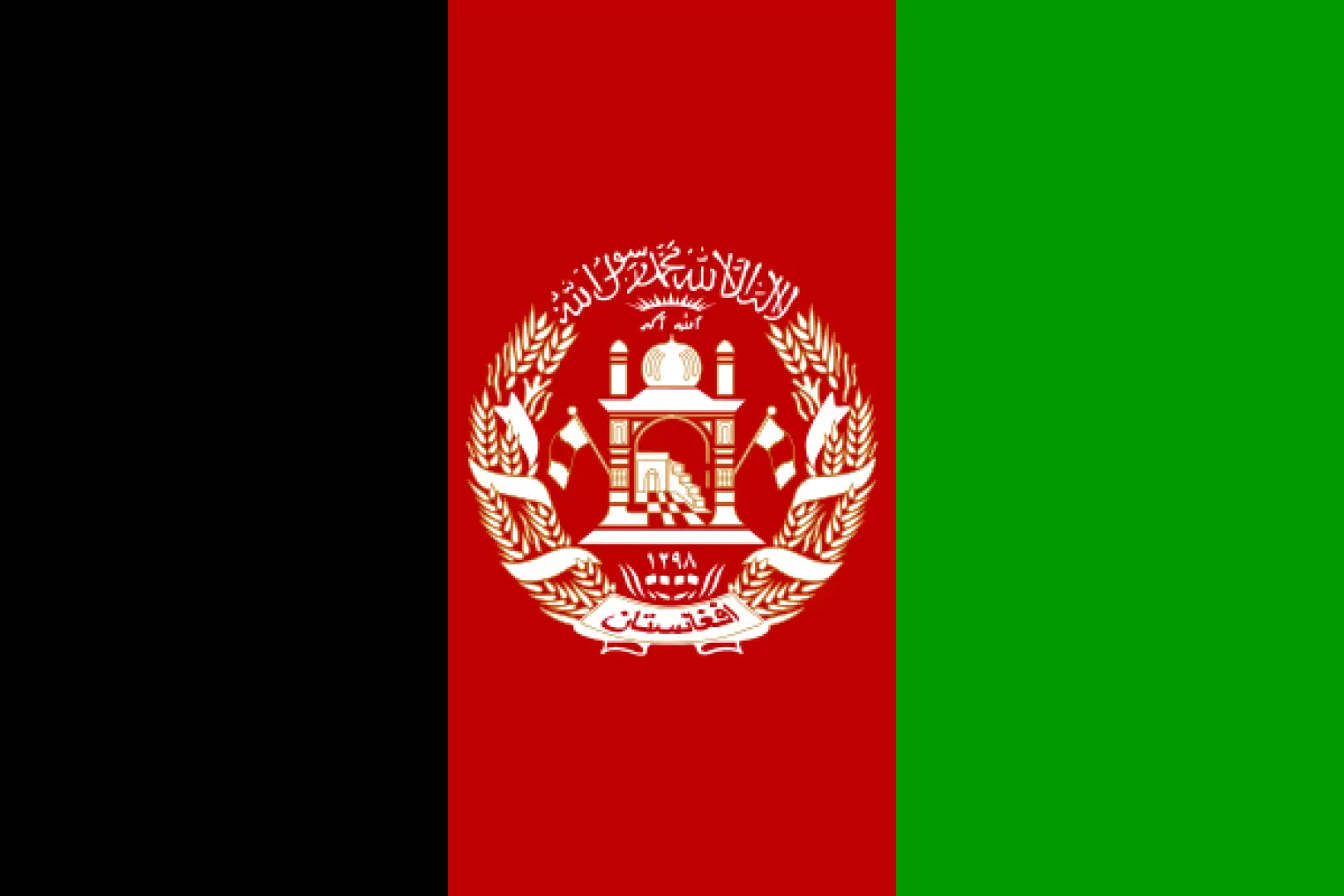

Edited by:
Massimo Martini
Access
Afghanistan is a landlocked state that can only be reached from abroad by air or through land border crossings. The main international airport is Kabul International Airport, which has long operated as the main hub for connections to neighbouring countries and some destinations in Europe and Asia; its operations are subject to change depending on the internal political situation. Secondary airports are located in Kandahar, Herat, Mazar-i-Sharif and Jalalabad, with coverage limited to domestic flights and regional routes. The railway network is at an embryonic stage of development: the section from Hairatan to Mazar-i-Sharif, connected to the Russian broad gauge network of Uzbekistan, is the main existing infrastructure, together with the junction between Khaf, in Iran, and Herat, on the Iranian standard gauge. Internal transport is mainly by road. The Ring Road is the main road backbone, linking Kabul with Kandahar, Herat and Mazar-i-Sharif; the quality of the road surface varies significantly between the major routes and the secondary roads, which are often unpaved in mountainous and rural areas. Mountain passes such as the Salang, on the Hindu Kush, are vital infrastructure for internal connectivity but are subject to seasonal closures due to snow. The Wakhan Corridor, in the far north-east, and the Hindu Kush and Pamir areas require off-road vehicles and careful logistical planning. For any travel in the country, it is essential to check the safety conditions through the up-to-date guidelines of the Italian Ministry of Foreign Affairs.
.Introduction
Afghanistan is located at the crossroads of Central, South and West Asia, in a position that has determined its historical role as a transit territory between distant civilisations: the Silk Road traced some of its main branches, and the great empires of antiquity met and clashed there. The country is landlocked and bordered by six states - Iran, Pakistan, Turkmenistan, Uzbekistan, Tajikistan and China - which define its geopolitical complexity. The morphology is dominated by the Hindu Kush mountain system, which crosses the territory from north-east to south-west, reaching altitudes of over seven thousand metres, and then joins the Pamir to the east and the Iranian highlands to the west. The plains extend along the northern belts, along the course of the Amu Darya, and in the southern depressions where desert and semi-arid environments dominate. The population is ethnically diverse, with Pashtun, Tajik, Hazara and Uzbek components, each with their own linguistic and cultural traditions. Islam, in its prevailing Sunni form, constitutes the unifying identity reference, declined in different forms according to the regions and ethnic groups. For decades, the country has been experiencing political instability that has profoundly marked its social fabric and infrastructure, even though the territory is endowed with natural resources and an important historical heritage.
Description
The Afghan territory is predominantly shaped by the Hindu Kush range, which rises up to the 7,492m Noshakh, the highest point in the country, and continues north-eastwards connecting with the Pamir knot and north-westwards with the Badakhshan ranges. Deep valleys carved by rivers such as the Kabul, the Kokcha and the Hari constitute the main arteries of historical settlement. Towards the north, the Bactrian depression hosts a fertile belt traversed by the Amu Darya and its branches, while the south and southwest are occupied by the desert Registan Plateau and arid environments extending towards the Iranian border. Lakes of natural origin are scarce; the best known is the Band-e Amir lake system in Hazarajat, which was granted national park status in 2009, the first in its history. The fauna includes species of high zoogeographical value: the snow leopard (Panthera uncia) roams the higher altitudes of the Hindu Kush and the Pamir, while the markhor (Ovis ammon polii), with its characteristic spiralled horns, is found in the Wakhan areas. The markhor (Capra falconeri) inhabits the rocky walls and high pastures of the eastern areas.
The history of Afghanistan intertwines the great trajectories of the civilisations of ancient Asia: the territory was traversed by Alexander the Great in the 4th century BC, and the cities of Bagram and Herat preserve traces of that Hellenistic passage. The Kushana empire, between the 1st and 3rd centuries A.D., produced an original synthesis of Greco-Roman art and Buddhist tradition, of which the famous Buddhas of Bamiyan - destroyed in 2001 - were the most impressive testimony. The Islamic conquests of the 7th century redefined the cultural framework, and the territory became a key junction of the Eurasian trade routes. Between the 10th and 12th centuries, the Ghaznavid dynasty made Ghazni one of the main cultural centres of Islamic Asia. Subsequent Mongol rule and the short-lived Timurid flourishing with its capital Herat in the 15th century brought intense artistic and architectural activity before the rise of the Safavid Empire and then the Durrani, who established the Afghan state under Ahmad Shah Durrani in 1747. The 19th century saw the country become a contested ground between the Russian and British empires - the so-called Great Game - with three Anglo-Afghan wars marking its history until independence in 1919. The Soviet invasion of 1979, the civil war of the 1990s, the first Taliban regime, and then the international intervention led by the United States since 2001 have defined the country's contemporary condition, culminating with the return of the Taliban in 2021.
The economy is traditionally agricultural, with wheat, maize and fruit cultivation in the irrigated valleys, and an important pastoral component in the mountainous areas. The country possesses significant mineral deposits - including copper in the Mes Aynak area, iron in Bamiyan and lithium in Ghazni - that are largely untapped due to instability and poor infrastructure. Textile handicrafts, in particular the production of knotted pile carpets with traditional geometric patterns, is one of the most internationally recognisable cultural expressions. The literary tradition in the Dari and Pashtu languages is rich, with a strong presence of classical Persian poetry; the rubâb, an instrument with plucked strings, is central to traditional music. Afghan cuisine reflects the country's geographical location with preparations based on rice, lamb, spices and lavash bread, with significant regional variations.
Afghan protected areas are limited but of biological significance. The Band-e Amir National Park, established in 2009 in the Hazarajat, protects a series of deep blue lakes of travertine origin, separated by natural limestone dams, and is considered the country's first national park. The Wakhan Corridor in Badakhshan is an area of exceptional natural and anthropological value, where the Pamir range reaches its highest altitudes and Kyrgyz communities maintain a nomadic lifestyle thousands of years old; it is a candidate for future international protection. UNESCO sites in Afghanistan include the Minaret and archaeological remains of Jam, in Ghor, and the Cultural Landscape and Archaeological Ruins of Bamiyan, both of which are inscribed on the List of World Heritage in Danger.
Hiking in Afghanistan is a practice historically linked to geographical and mountaineering exploration rather than a structured trail network. The Wakhan Corridor, which stretches over 300 kilometres between the Afghan Pamir and the borders with Tajikistan, Pakistan and China, offers high-altitude trekking routes in one of the most remote environments in Central Asia. The Kyrgyz and Wakhi villages in the valley allow for stops in elementary conditions. In the southern belt of the Hindu Kush, the valleys converging on Kabul and the Panjshir have traditionally welcomed trekkers and mountaineers. Access to these areas requires specific permits and autonomous logistics, given the limited development of accommodation facilities and varying security conditions.
Afghanistan's mountaineering history is linked to the exploration of the Hindu Kush and the Pamirs by European expeditions during the 20th century. Noshakh (7,492m), on the border with Pakistan, was first climbed in 1960 by a Japanese expedition led by Toshiaki Imanishi. The northern range of the Hindu Kush, with peaks between 5,000 and 7,000 metres concentrated in Badakhshan, was the subject of systematic exploration in the 1960s and 1970s by German, Japanese and British mountaineers. The Wakhan Corridor attracted expeditions dedicated to the Afghan Pamir mountains, particularly the junction between the Koh-e Wakhan and the ranges that connect with the Karakorum system. Mountaineering in the area has essentially been interrupted since the late 1970s due to the war, with rare exceptions in the 2000s.
Trail running in Afghanistan does not have a tradition of structured races nor internationally recognised competitive circuits. The orographic characteristics of the country - the Hindu Kush with its deep valleys, the Hazarajat plateaus and the Pamir plains - offer theoretically suitable environments for the practice, but the political and infrastructural conditions do not currently allow the development of organised events. The discipline remains absent from the Afghan sporting landscape as a structured activity.
Information
General Data
Capital: Kabul
Area: 652,864 km²
Minimum elevation: 258m (lower Amu Darya)
Maximum elevation: 7,492m - Noshaq
Inhabitants: 40.099.460 (estimate 2021)
Official name: دَ افغانستان اسلامي جمھوريت / Jomhūrī-ye Eslāmī-ye Afghānestān
Name of inhabitants: Afghans
Provinces: 34
Bordering nations: China - Iran - Pakistan - Tagikistan - Turkmenistan - Uzbekistan
Institutional site: https://mfa.gov.af