Customs Officers’ Trail (2/4): Villefranche – Saint-Jean-Cap-Ferrat – Beaulieu-sur-Mer

Edited by:
Maurizio Bergamini
Updated at: 16/08/2026
Access
As well as by car, you can also travel by train (get off at Villefranche and then walk to the nearby beach) or by bus (no. 15 from Nice or the Menton–Nice–Menton route). In both cases, the most convenient stop is “Pont-Saint-Jean”.
Introduction
The second section of the Sentier des douaniers: it circles the Saint-Jean-Cap-Ferrat peninsula from Villefranche to Beaulieu
Description
If you’re coming from the station or the pay-and-display car park at Villefranche beach, you need to walk up the steps along the railway embankment heading west. Follow the narrow road that runs alongside the fences of the luxury residences. One of these (photo 2) is called Nellcote and was built by Mr Goldenberg, an American who survived the sinking of the Titanic. The villa has changed hands several times, but it is famous because, in 1971, it was home for eight months to Rolling Stones guitarist Keith Richards and his family (who were on the run from the British tax authorities). During those months, he was joined by the other band members and a whole team of technical staff to record (stealing electricity from the nearby railway). The result was a masterpiece of an LP: *Exile on Main Street*.
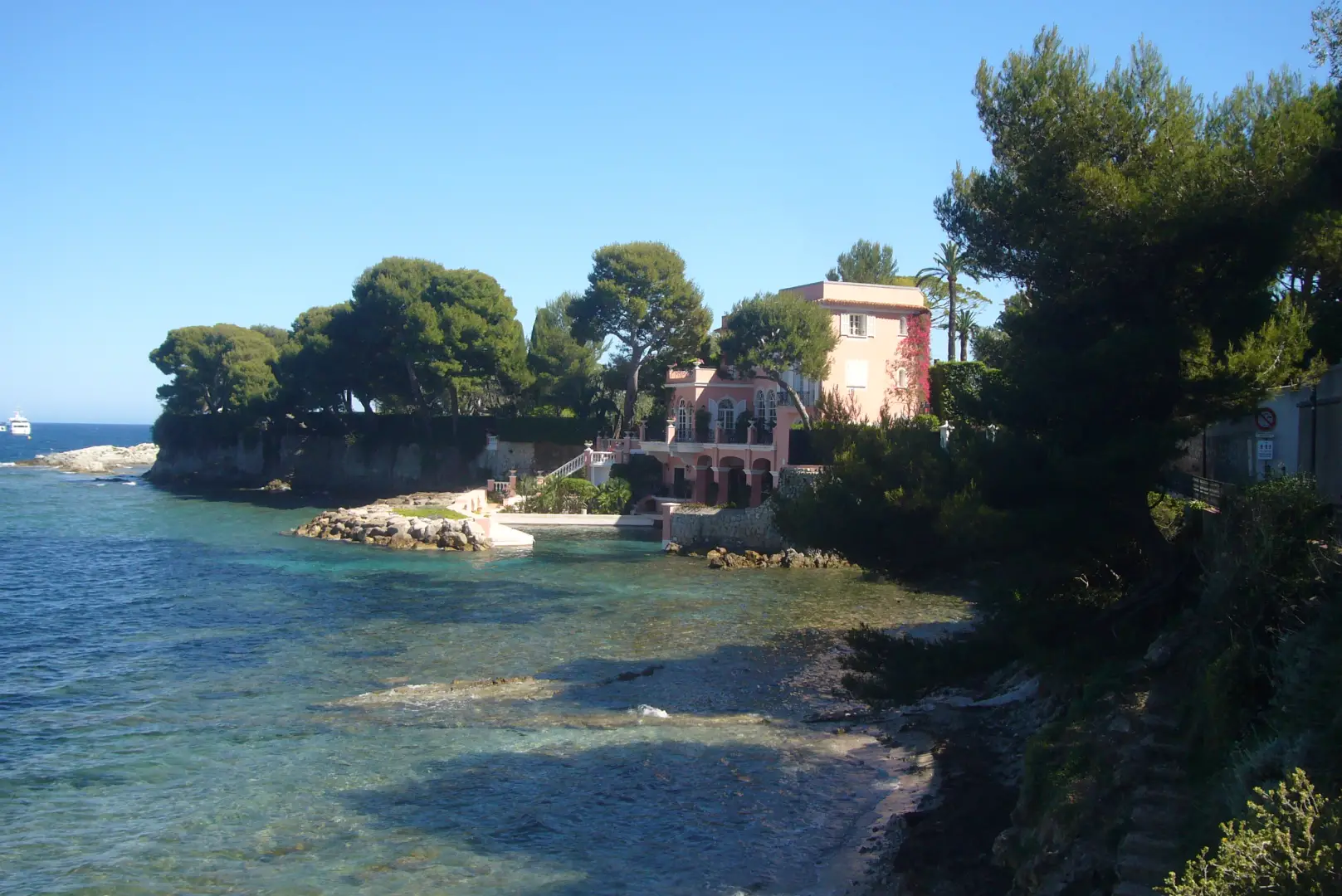
Continuing a little further on, you reach the so-called Pont-Saint-Jean, where several roads intersect: the ‘corniche’ that runs along the entire coast, the road to the village of Saint-Jean-Cap-Ferrat, and the road leading down to Beaulieu. We must follow Avenue de Grasseuil downhill. A narrow path on the right would lead down to the seafront, but it then becomes private property, so it’s best to stay on the tarmac road. After 700 metres, you’ll see the turquoise-green roofs of Villa Baia dei Fiori, followed by Villa Ibéria, once owned by Rainier III of Monaco and the setting for his romantic encounters before the Grace Kelly era. The villa has a private jetty and is now owned by an Italian aristocratic family.
Our walk continues towards Villa Ephrussi (the jewel of theentire peninsula) and, upon reaching the corresponding junction, turns right downhill in search of Plage de Passable, which is situated near two other ‘historic’ properties: the Radiana and the Joya, originally owned by King Leopold II of Belgium, who was as passionate about the area as he was about Miss Blanche, then aged seventeen… Next on the list of fortunate owners is the Marnier family, liqueur makers and inventors of Grand Marnier, which is still on the market, albeit now under the banner of a multinational corporation.
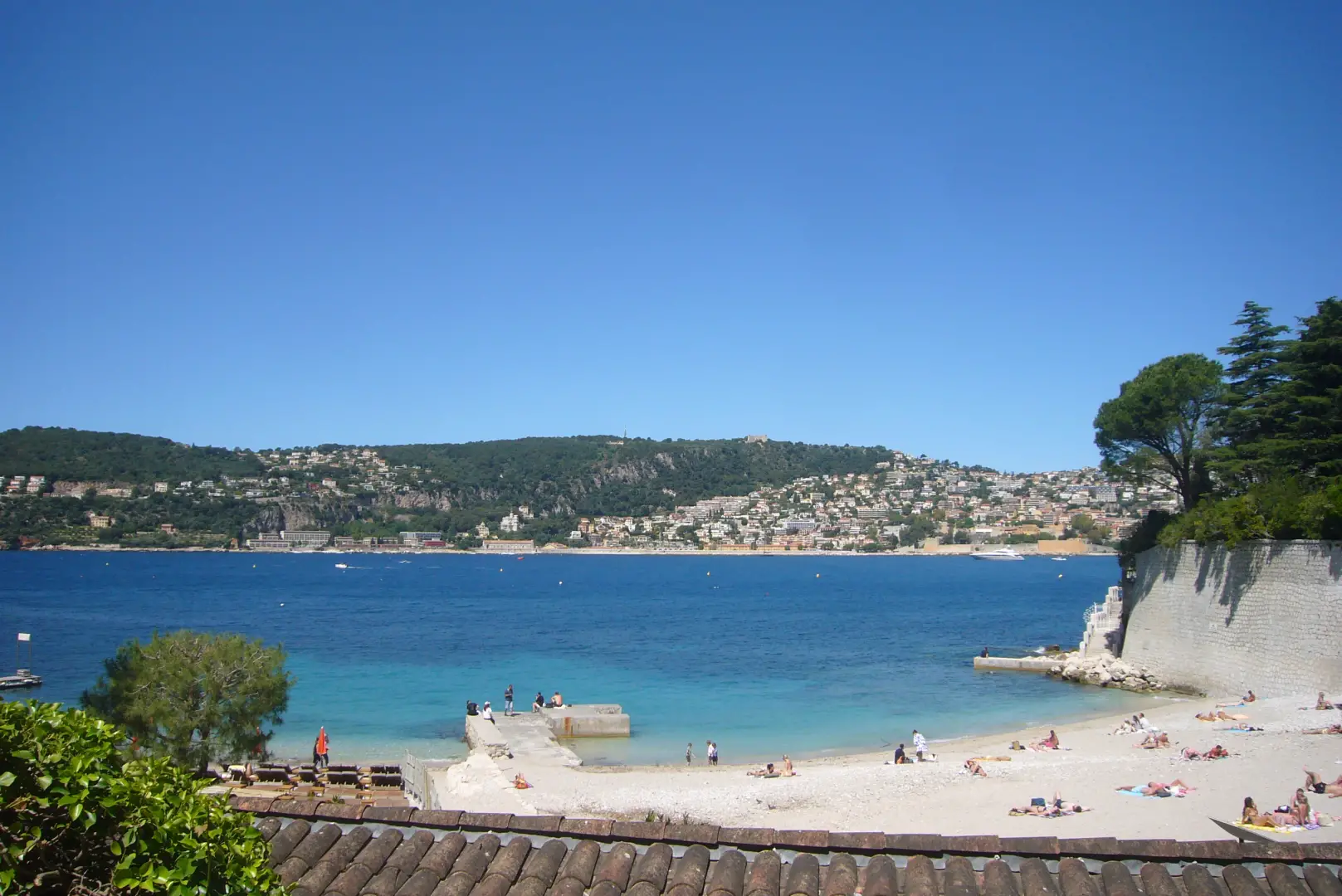
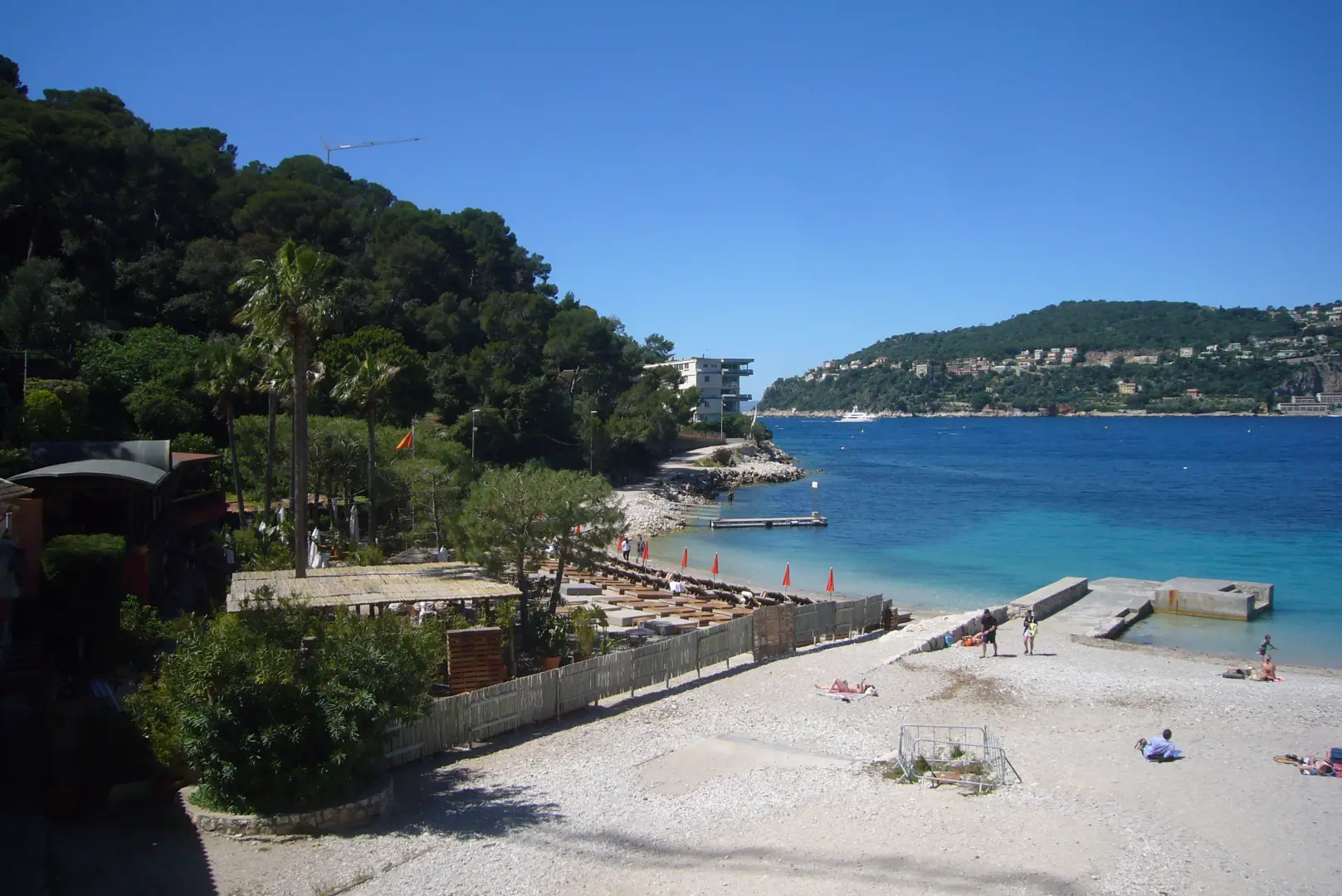
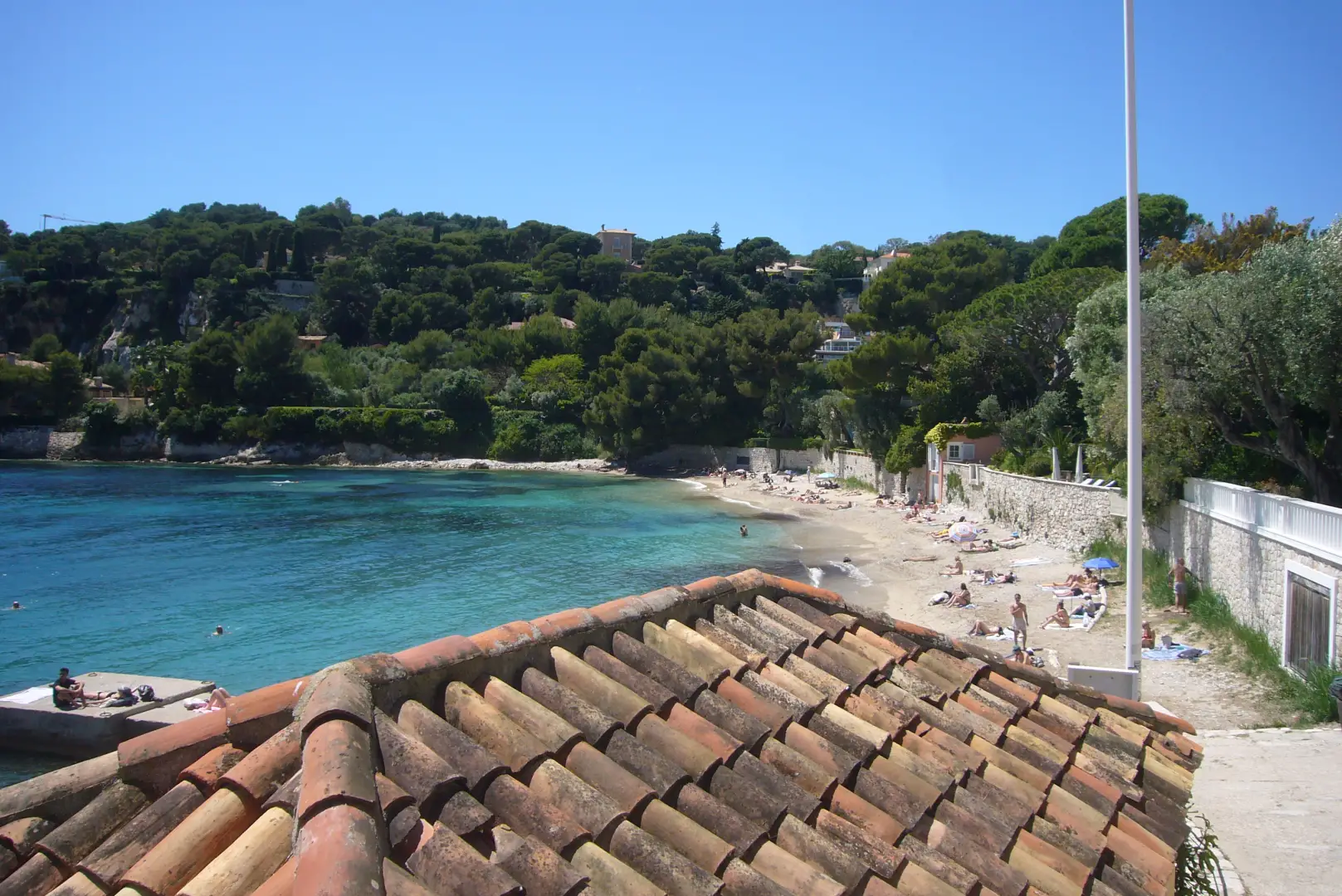
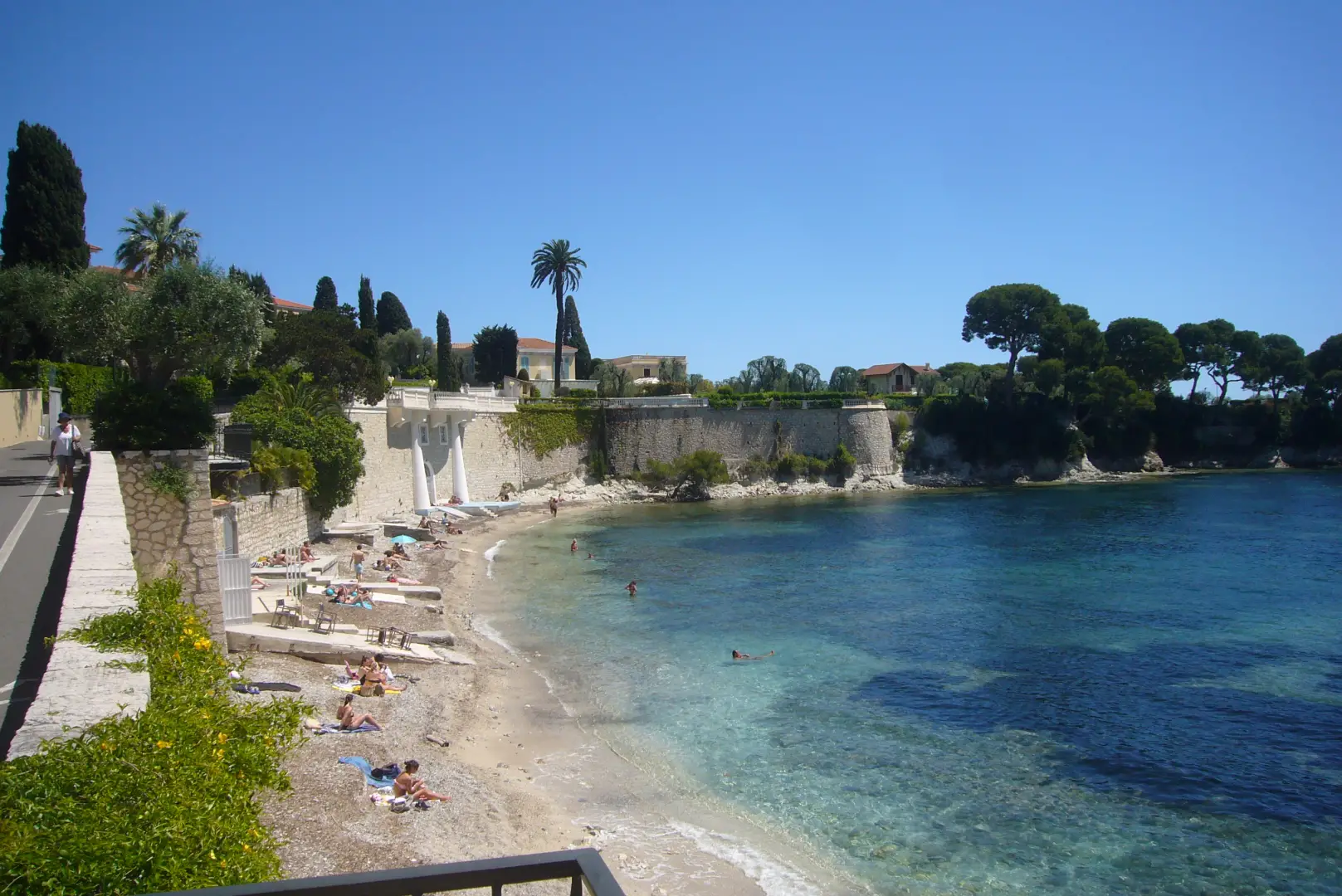
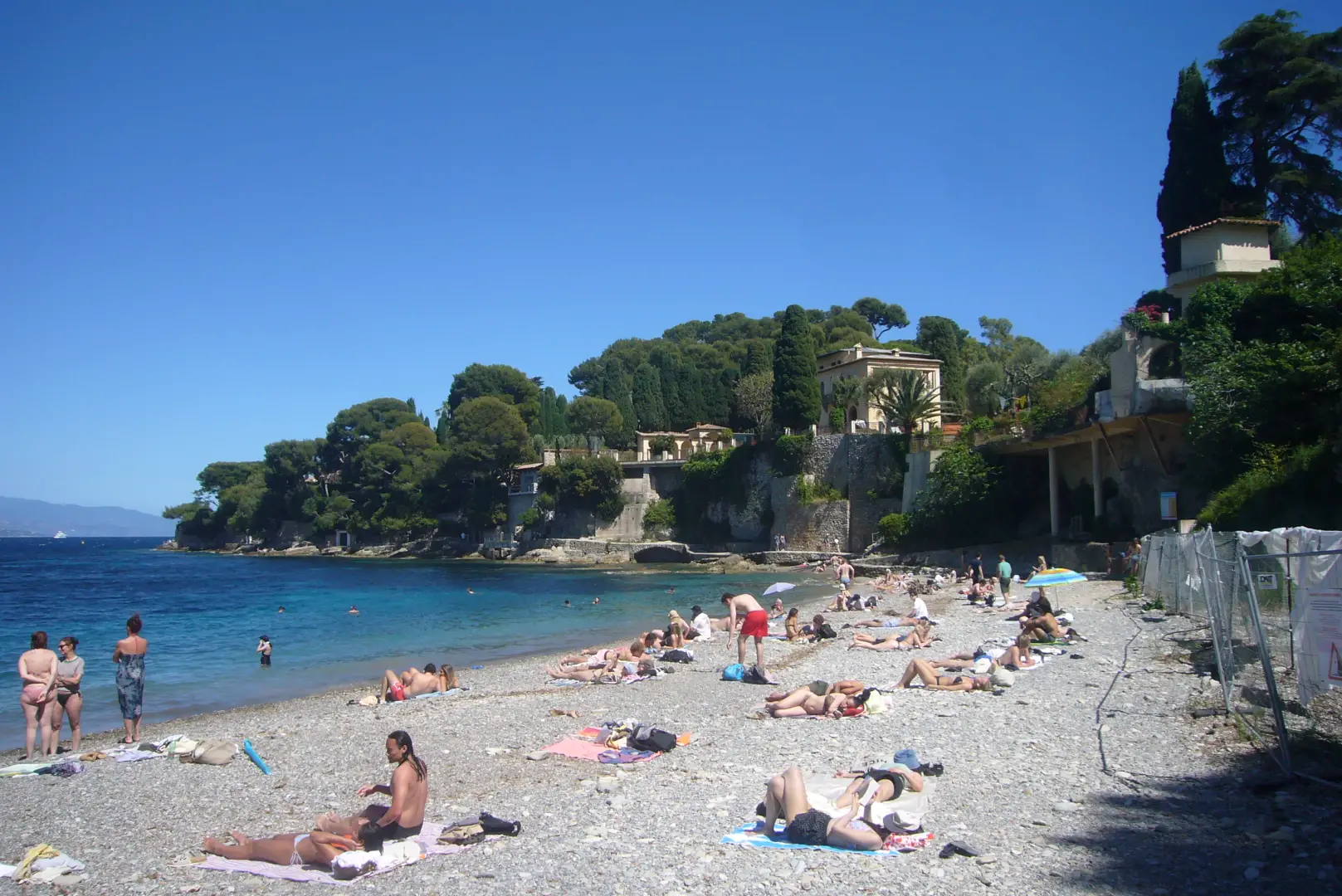
Finally, the built-up area ends and you reach the beach (photos 3 and 4). We walk southwards between the water’s edge and the first sun loungers belonging to the beach-side restaurants. In the 1950s, these deckchairs and the bar tables were frequented by the various celebrities who helped create the legend of the Côte d’Azur: actors, actresses, singers, sports stars and politicians.
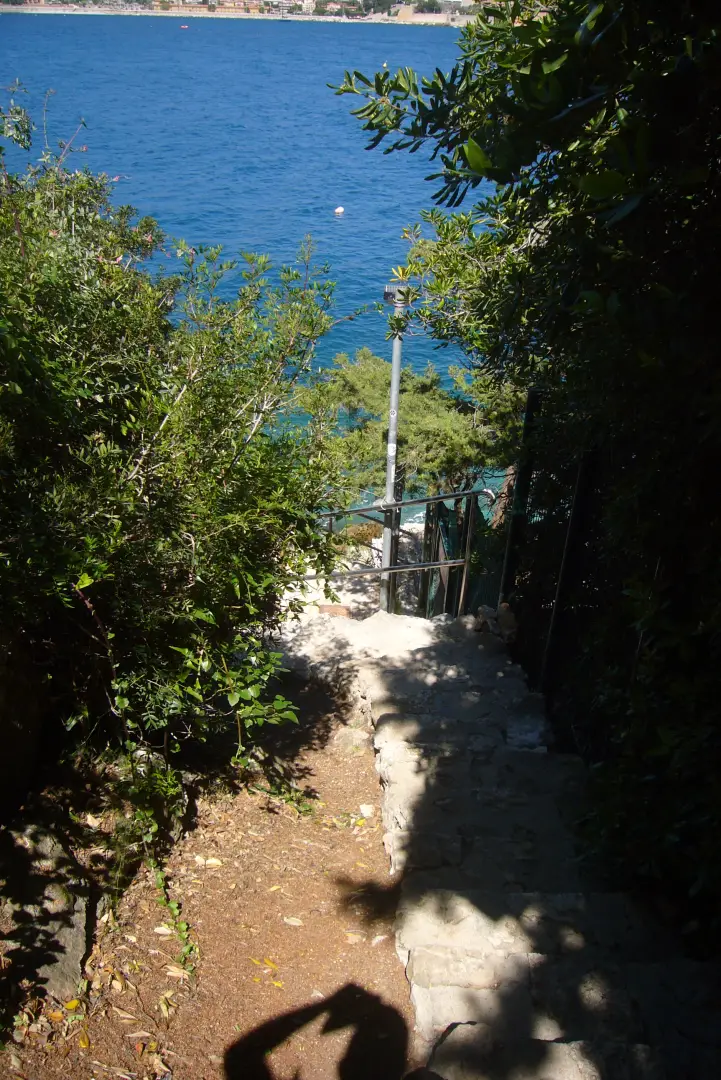
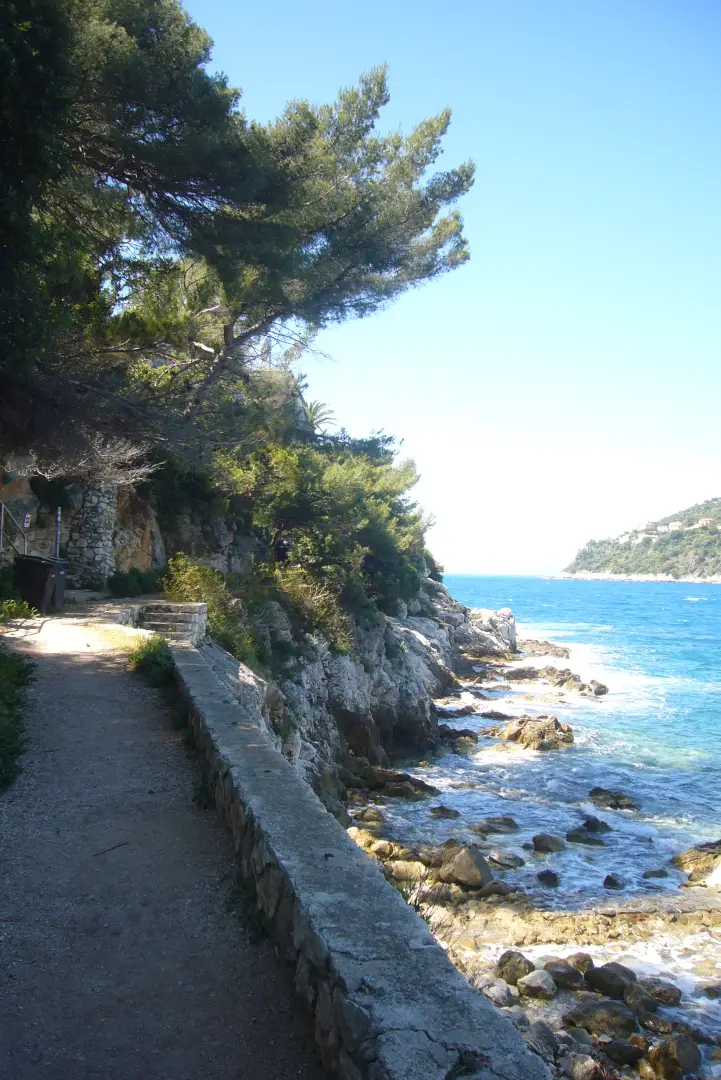
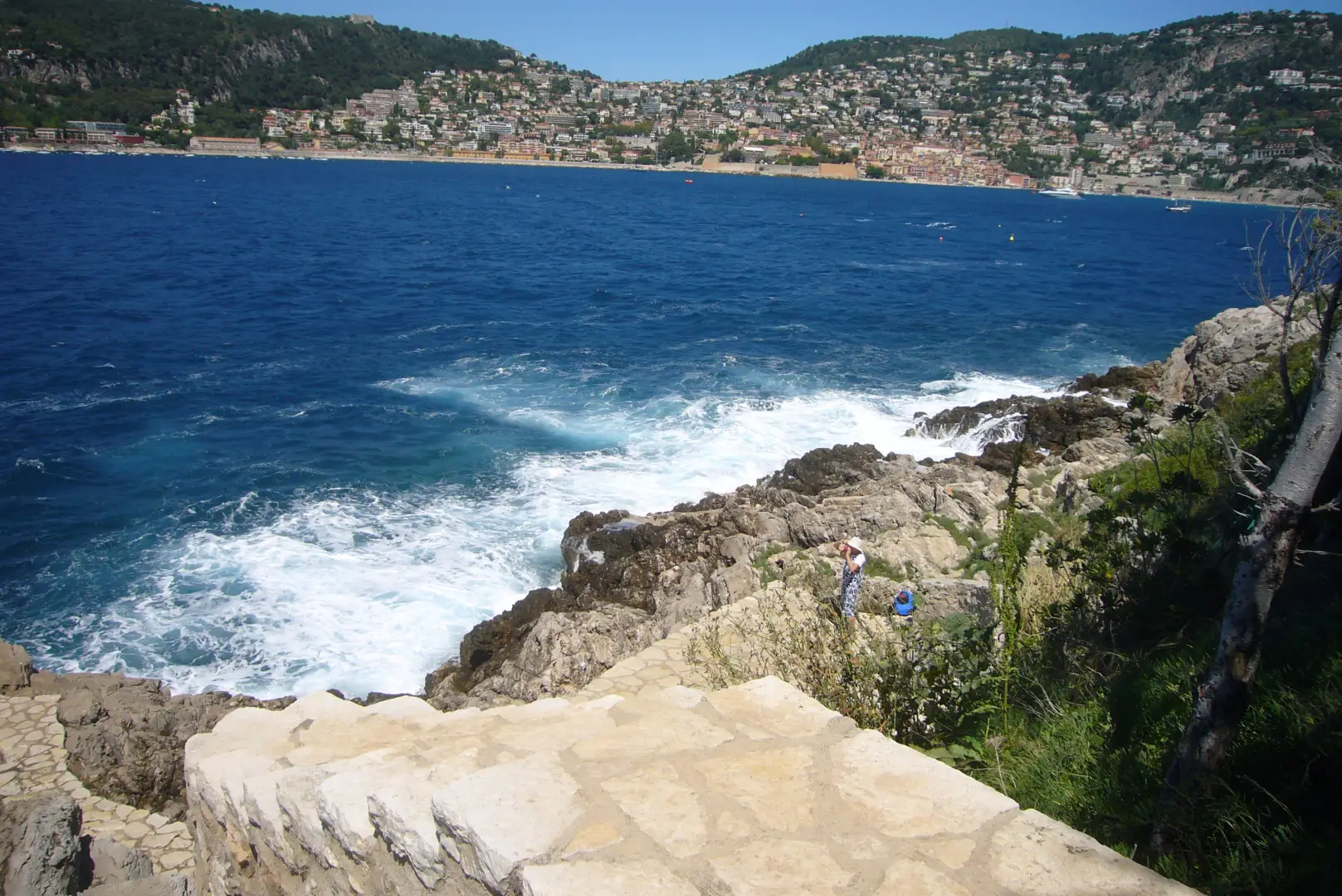
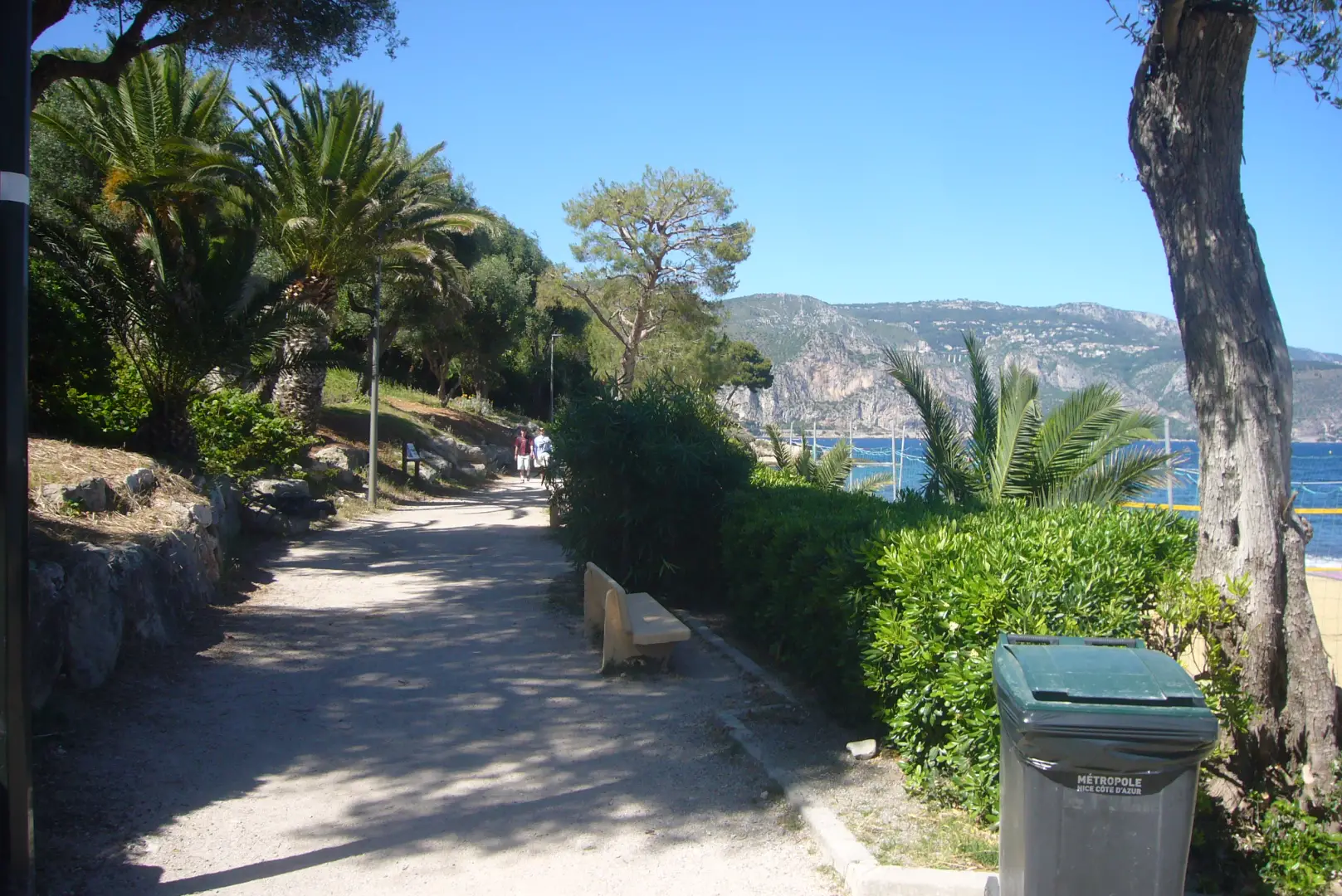
You return to the tarmac, but only briefly: a narrow path leads down towards the sea. (photo 5) Signs warn that it is dangerous in windy conditions or when the sea is rough. In reality, the path runs at least 10 metres above the water’s surface, so unless conditions are truly extreme, the risk of being swept away is rather remote. (photo 6)
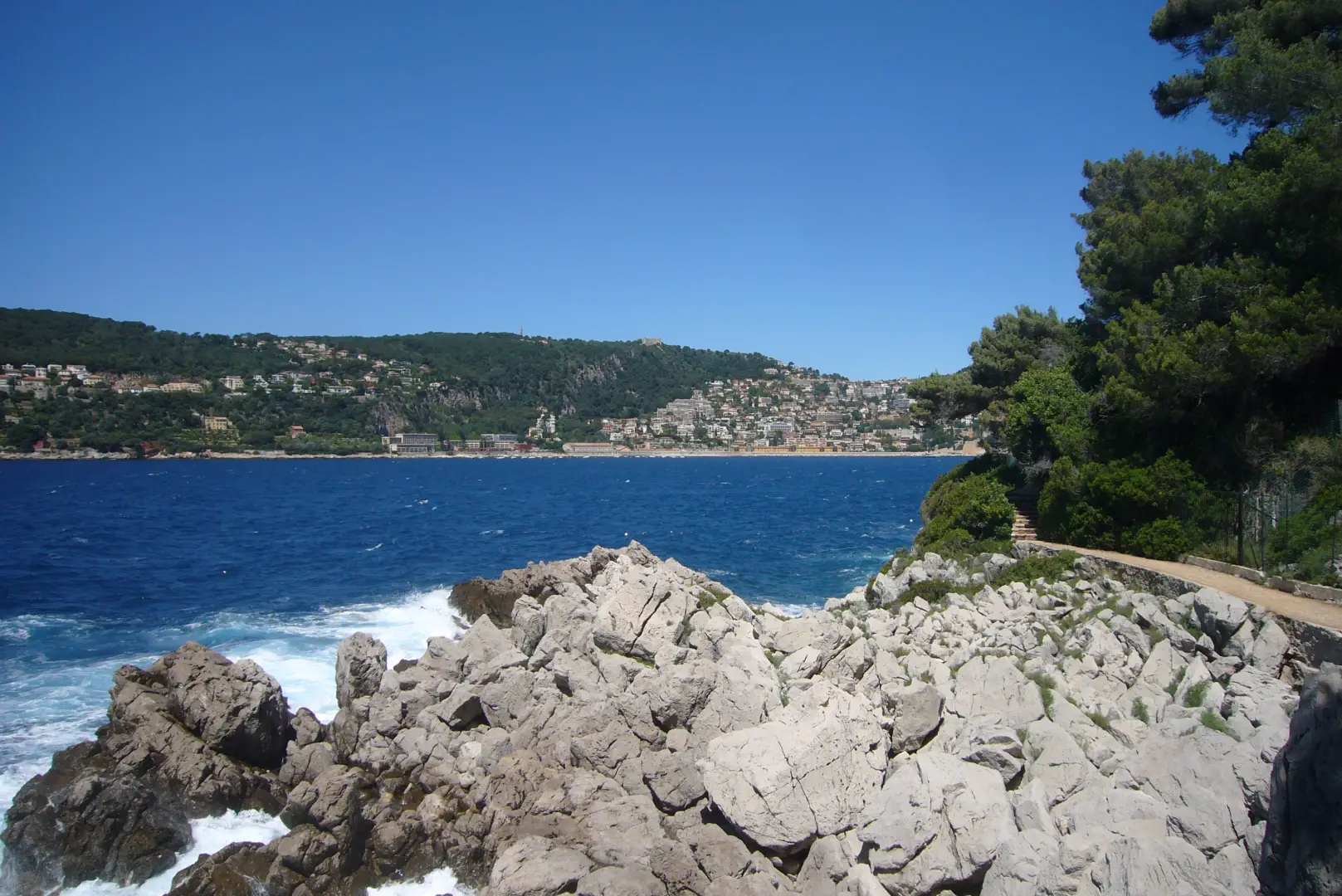
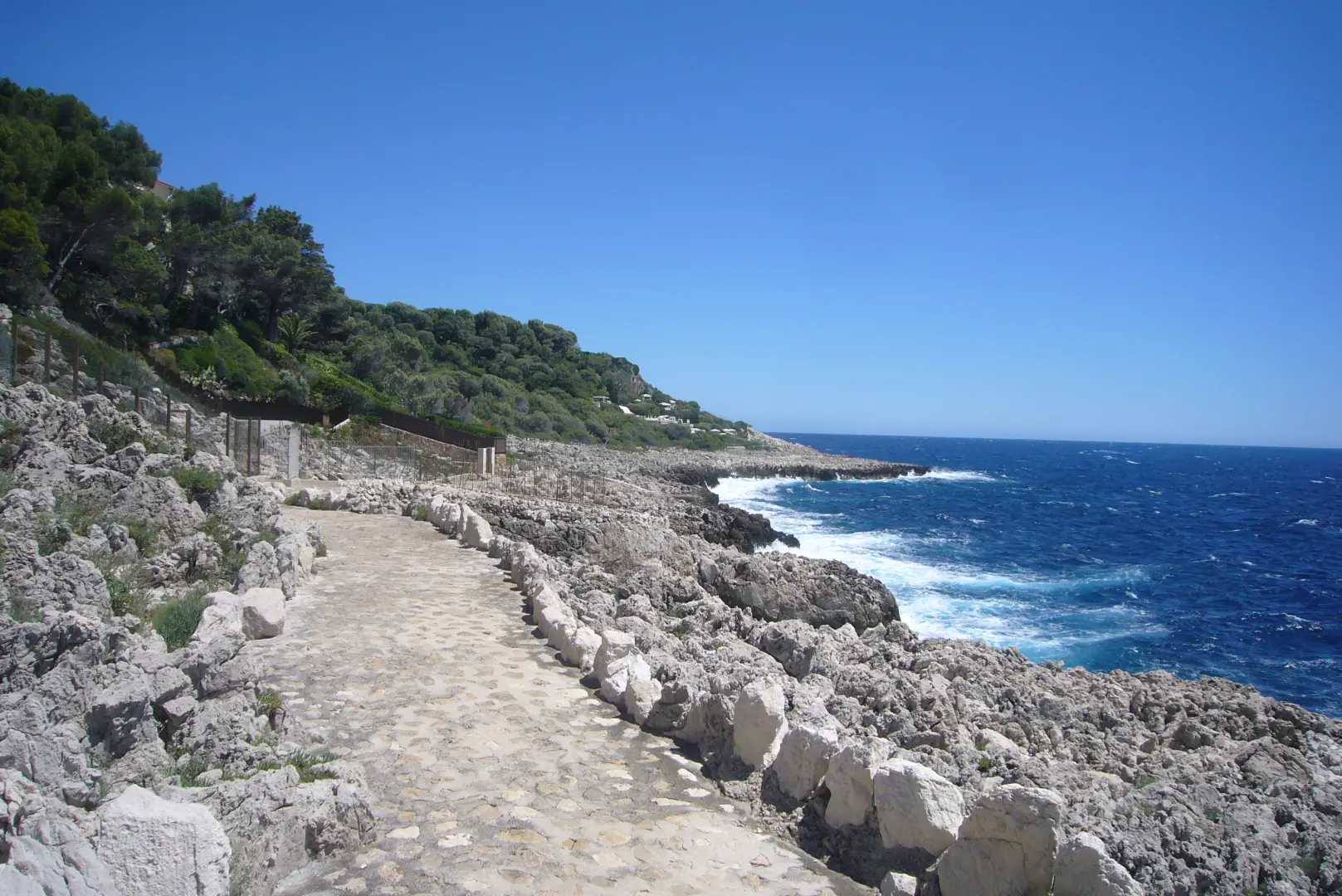
The path follows the coast for a couple of kilometres and is dotted with steps and passages leading down to the sea – a delight for sunbathers and good swimmers alike. (photo 7)
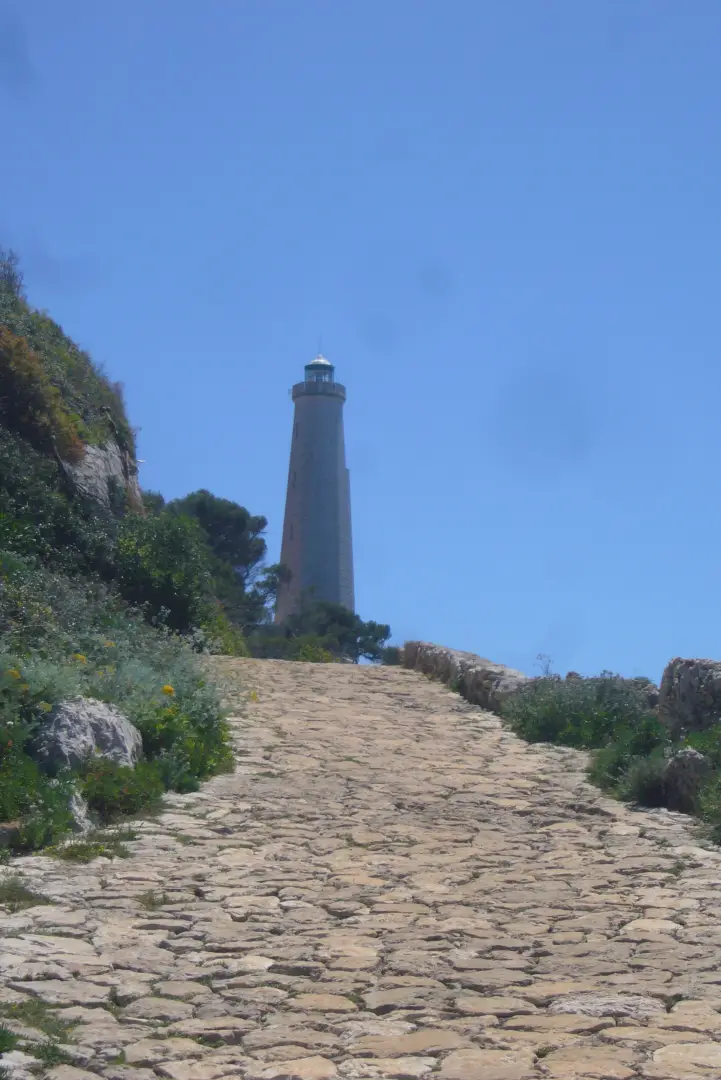
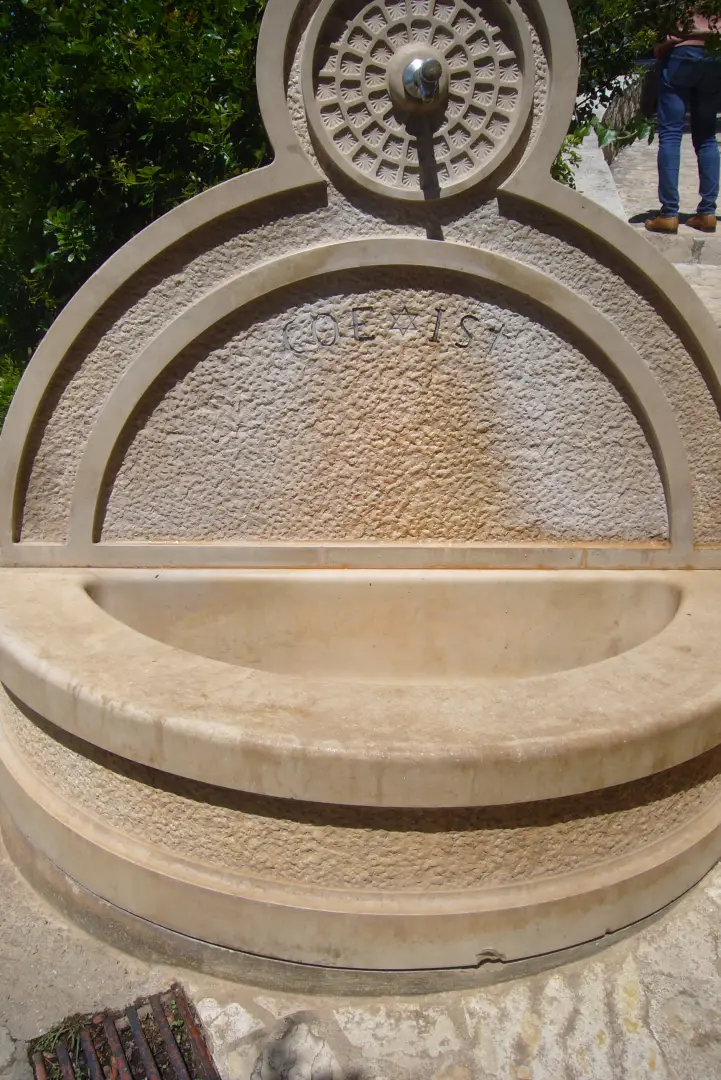
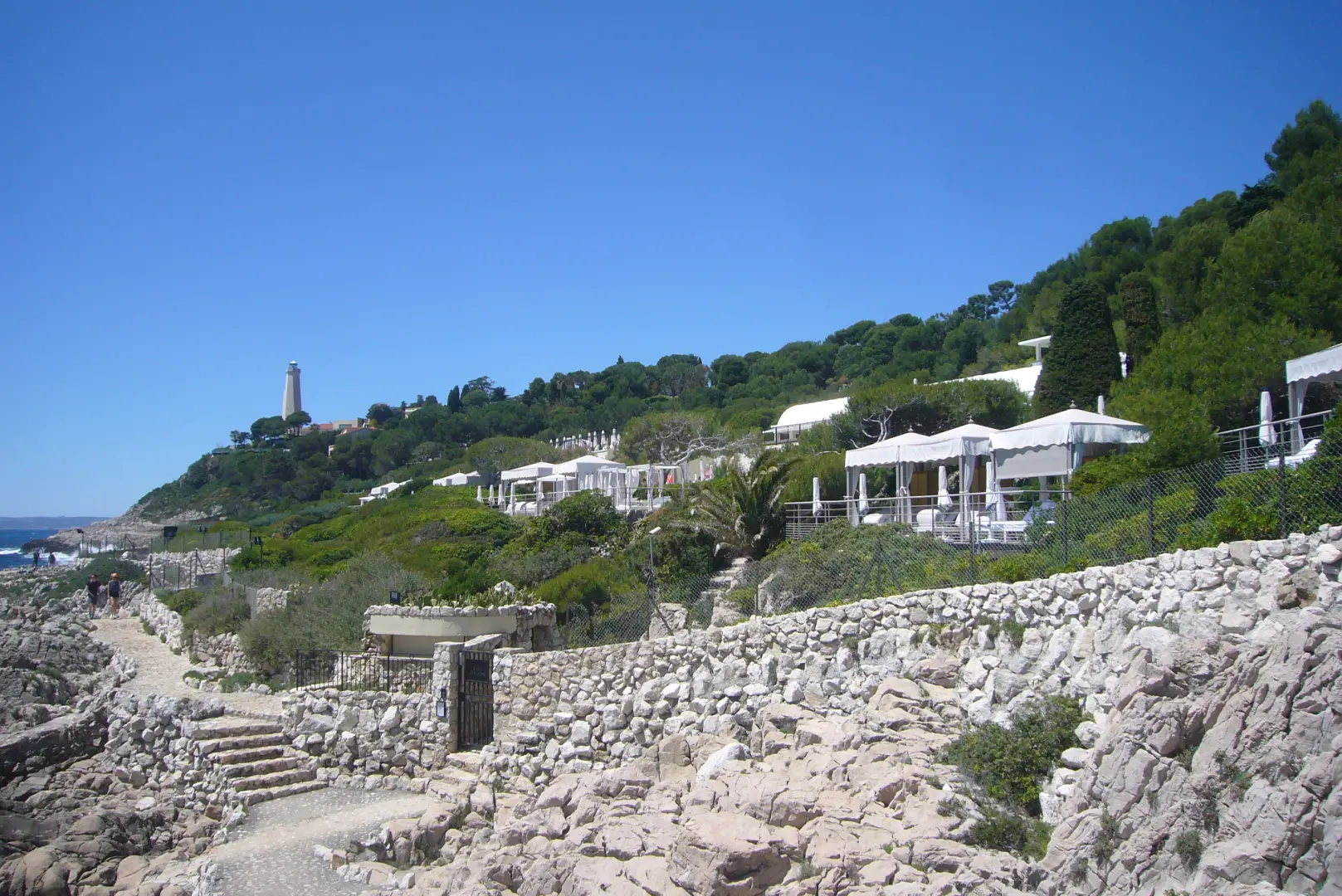
After about an hour’s walk in total, we’ll be near the lighthouse (photo 8). Here, a fork in the path offers the chance to climb up to the tower and then back to the village, but above all there is a drinking water fountain (photo 9) provided by the COEXIST association, which works for peace and reconciliation between different religions.
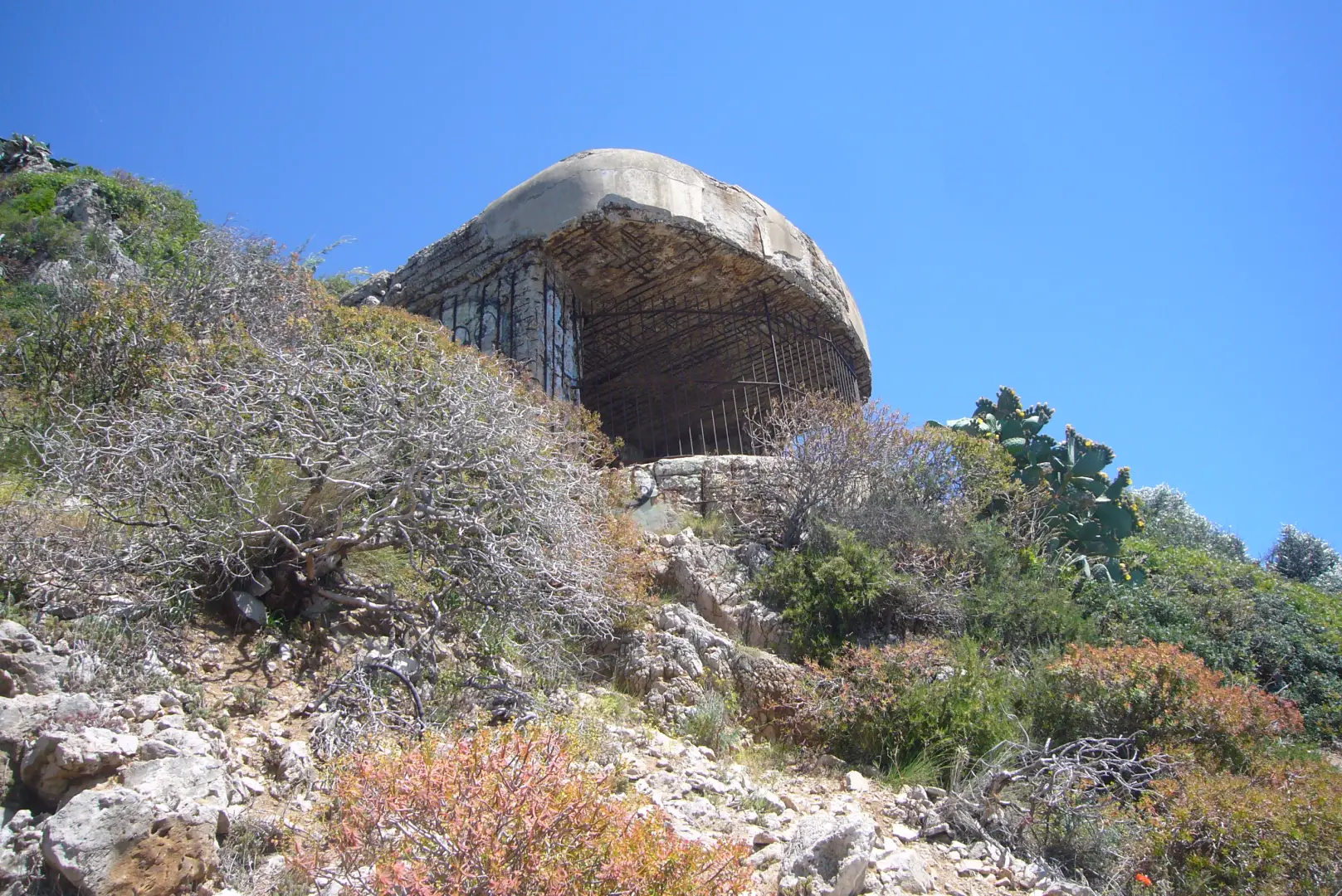
Further up the path, past the lighthouse, the parade of sumptuous villas and luxury hotels resumes, though our route, which stays close to the sea, is not exempt from this either. After the remains of a casemate dating from 1913, which housed a powerful searchlight to illuminate the harbour (photo 10), the landscape takes on a somewhat lunar appearance (photo 11) but isbut a desert: the greenery above is dotted with the luxurious gazebos of the Grand-Hôtel du Cap-Ferrat, a Four Seasons Hotel (photo 12), classified as a ‘palace’ and probably home to the largest swimming pool of any hotel on the coast.
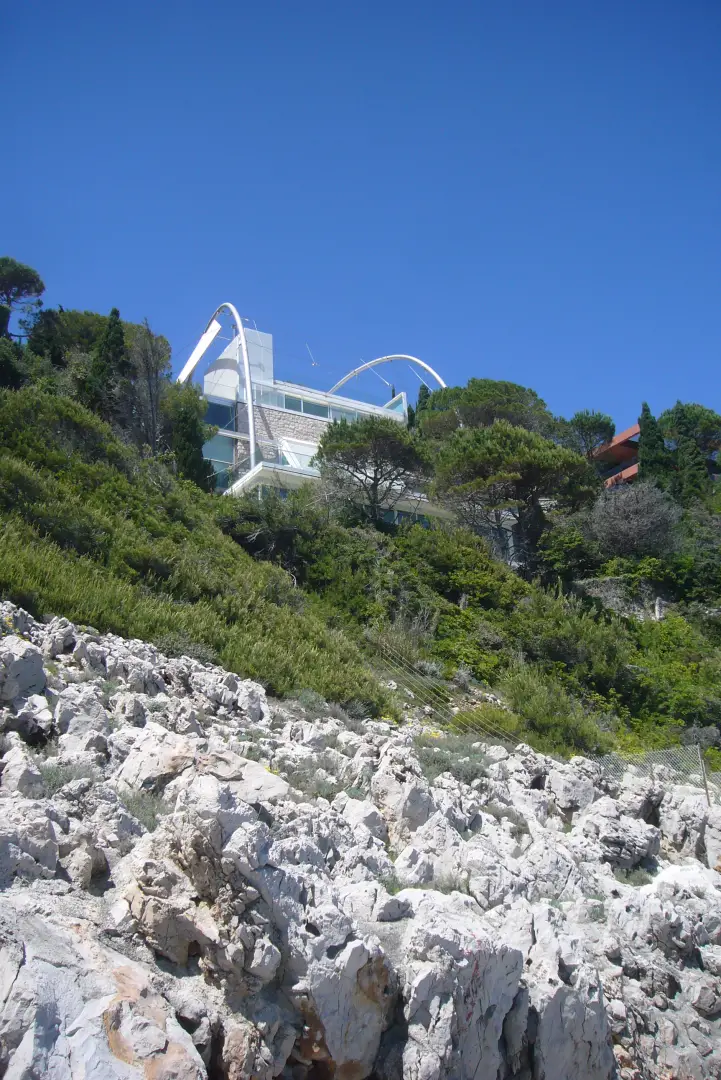
Shortly afterwards, you’ll be able to admire a masterpiece villa by the famous star architect Norman Foster (photo 13), the man behind the howitzer-shaped skyscraper in London, the Millau Viaduct and, closer to home, the Monaco Yacht Club. It is a seven-storey villa with a rooftop swimming pool and a system of triangular sails which, following the steel arches, provide shade for different parts of the building as required.
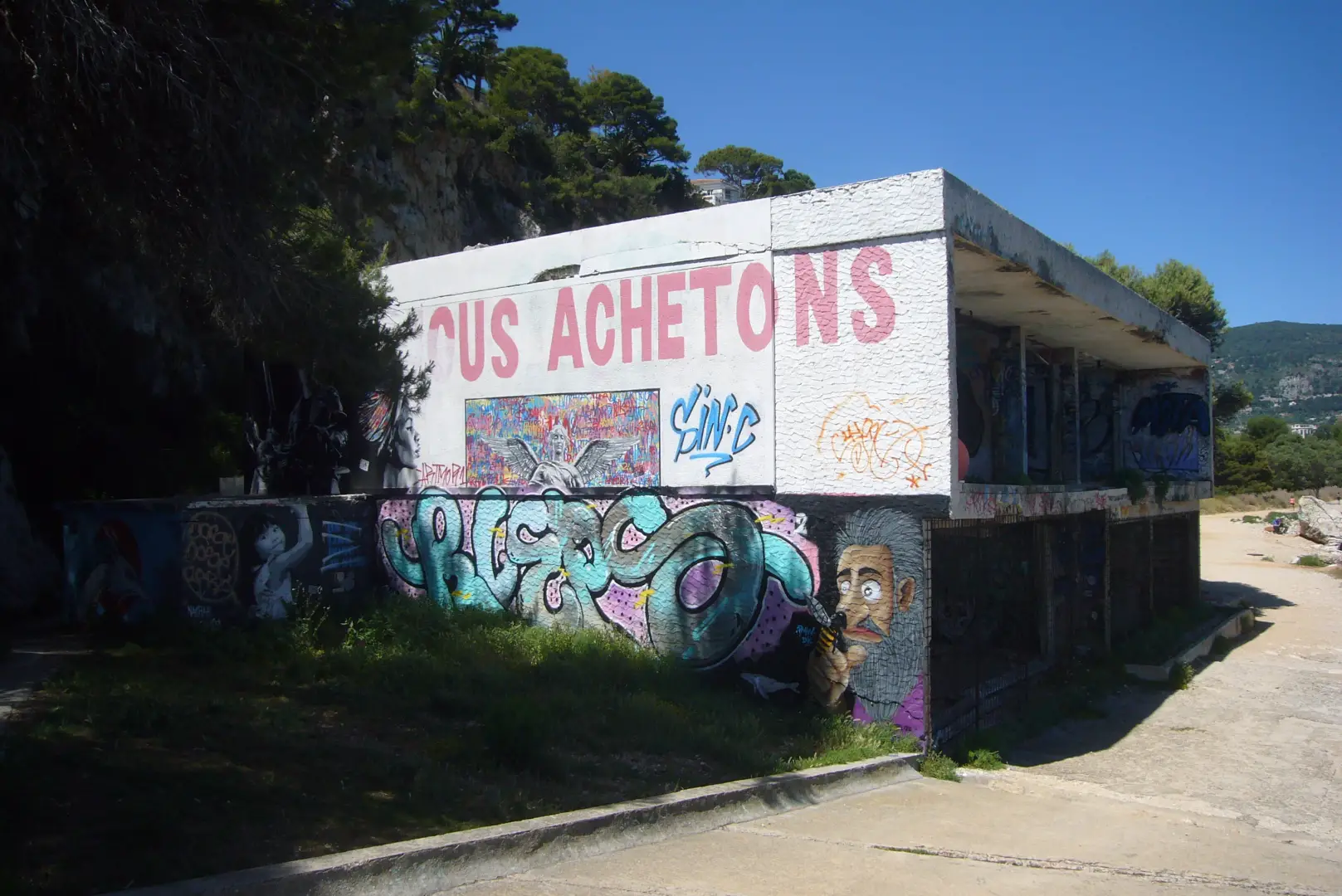
The path continues and, shortly afterwards, turns left heading north. By the time you reach an unauthorised building covered in graffiti (photo 14), you will have already covered 6 kilometres. The path then gradually becomes a private tree-lined avenue, flanked by prestigious residences. Turning right, you skirt the two beaches of Les Fosses and Les Fossettes (photos 15 and 16) before reaching the public gardens that lie just before the final stretch of the wild path (7.1 km covered) (photo 17). The next two kilometres, unlike the previous ones, are sometimes at water’s edge, so it is important to carefully assess both the quality of your footwear and the wind and wave conditions. These walks were also among the favourites of the German philosopher Friedrich Nietzsche, enhanced by generous libations of local wine.
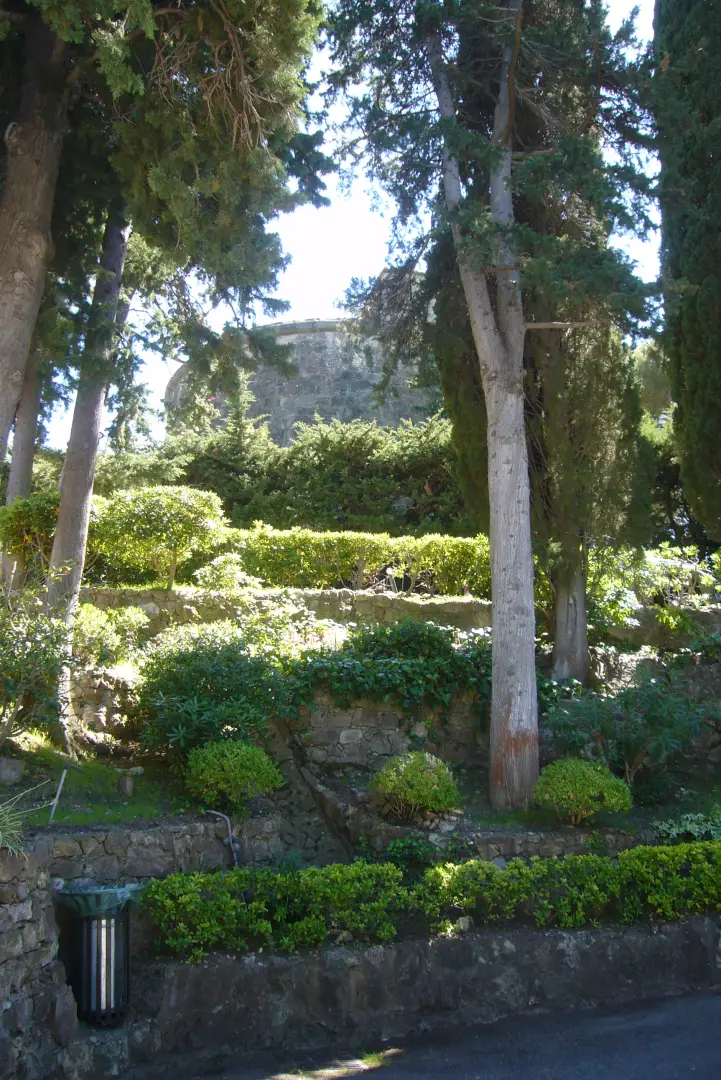
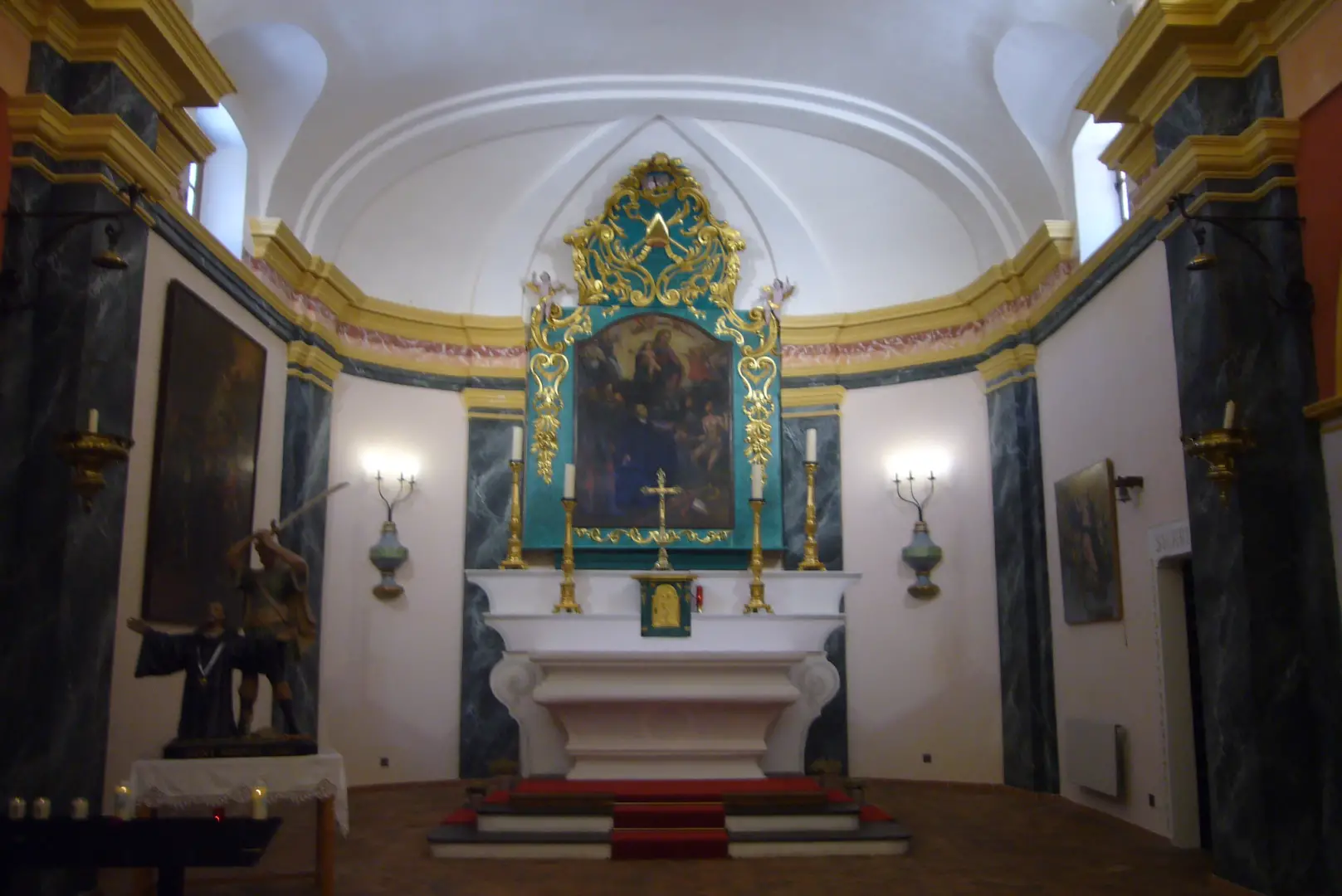
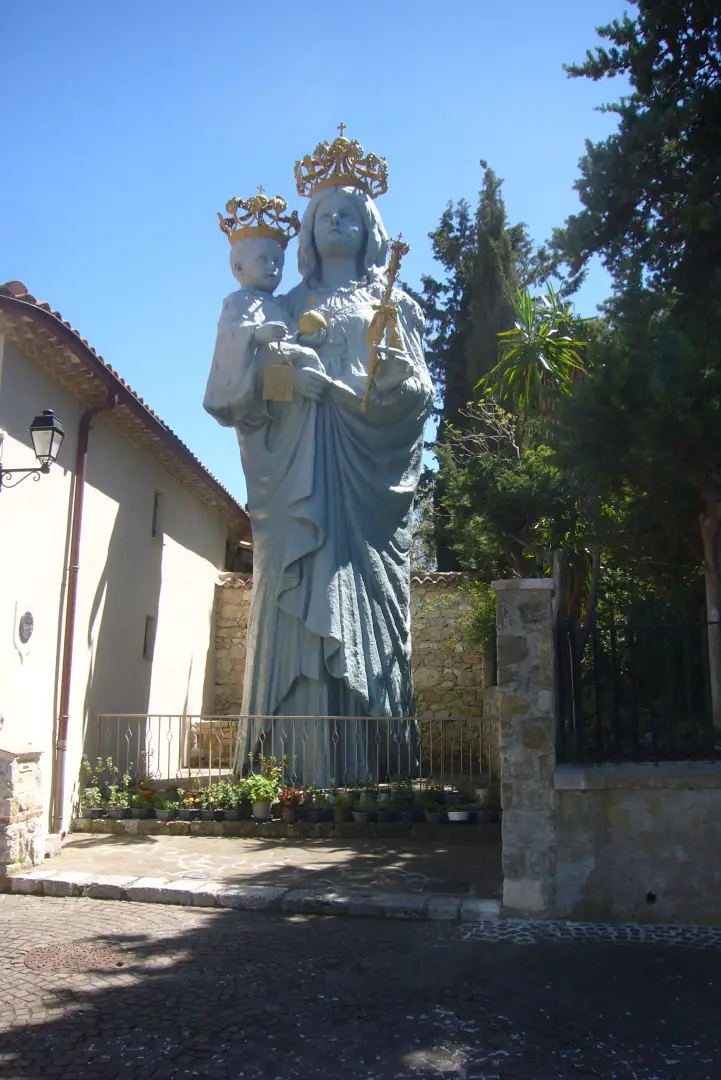
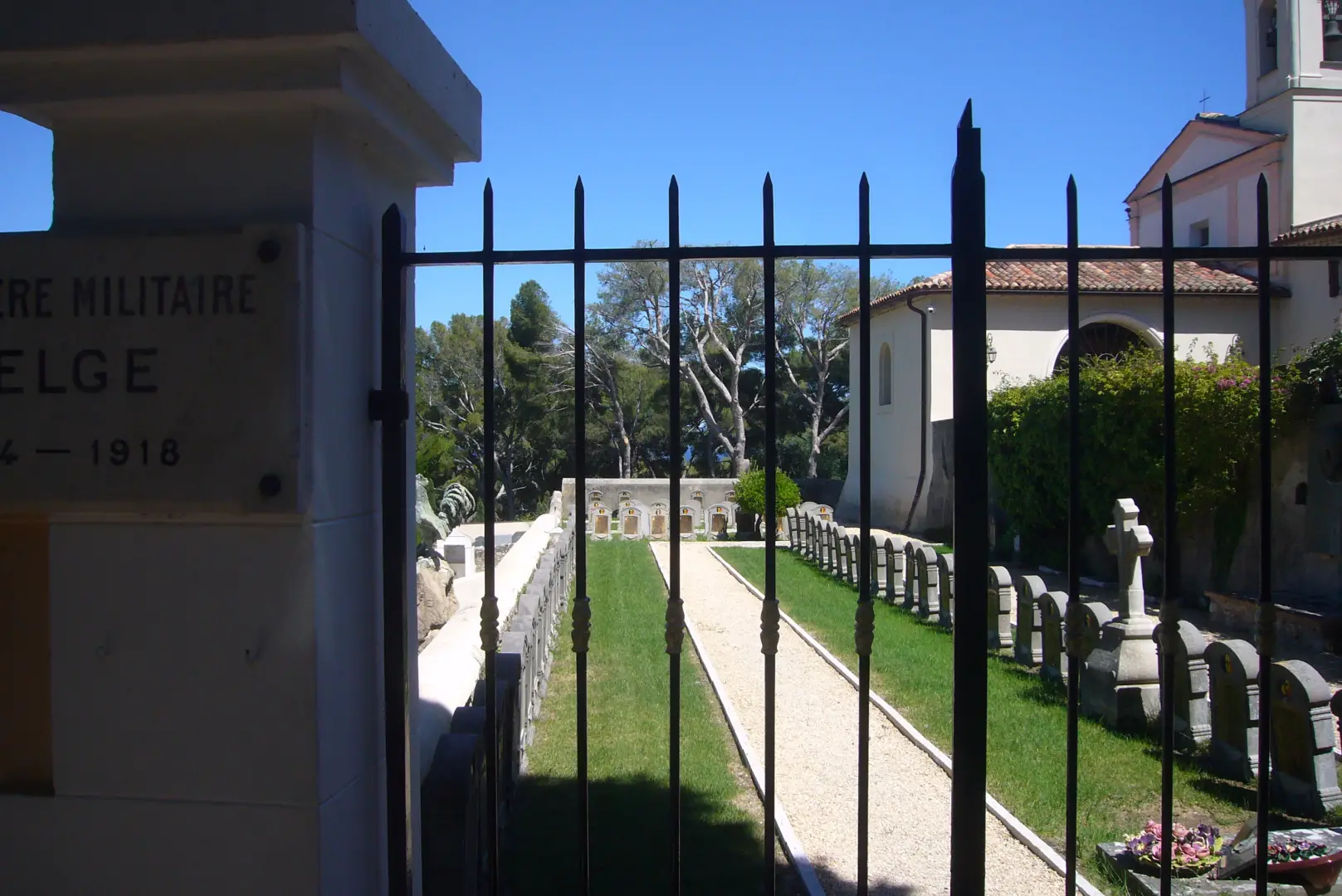
After about one kilometre, and having passed a Cubist bronze sculpture situated along the boundary wall of the hidden Villa Brasilia – built by anotheranother star architect: Oscar Niemeyer, you come to an uphill fork in the path leading to the church of Saint-Hospice. It’s a detour well worth the effort: at the top of the hill you’ll find anancient watchtower (now privately owned) (photo 18), a small church dedicated to the martyr Saint-Honorat (photo 19), a huge ex-voto statue that was intended to be placed atop the watchtower (photo 20) and a Belgian military cemetery from the First World War (photo 21). The statue looks rather ungainly because it was designed to be viewed from a distance, with a different perspective.
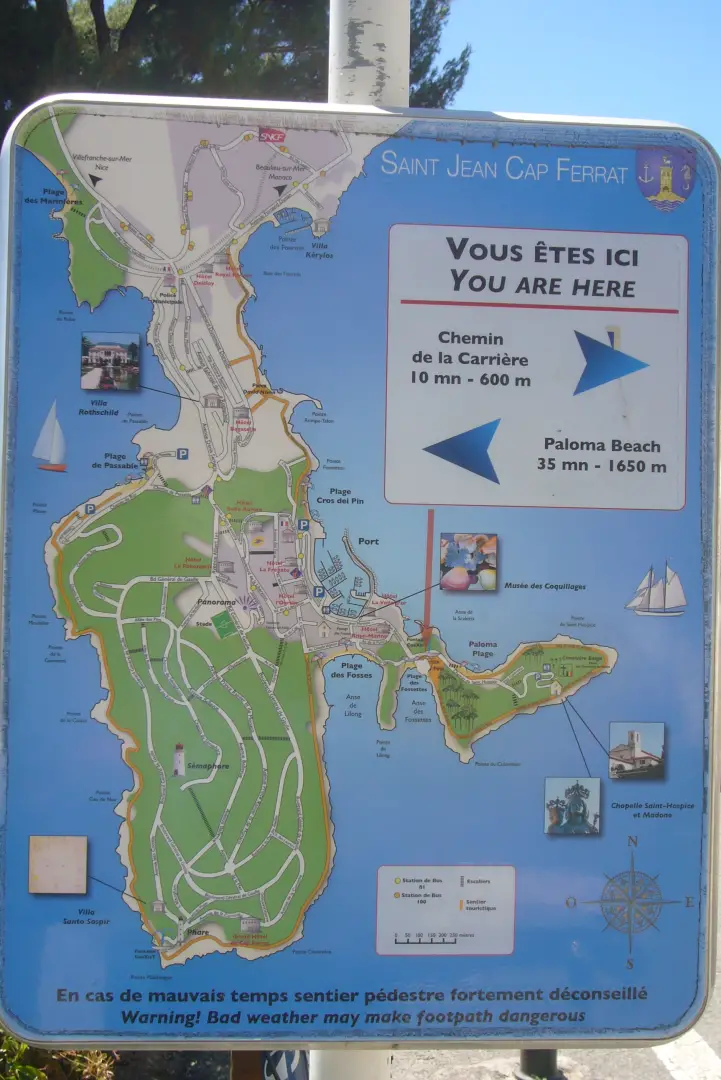
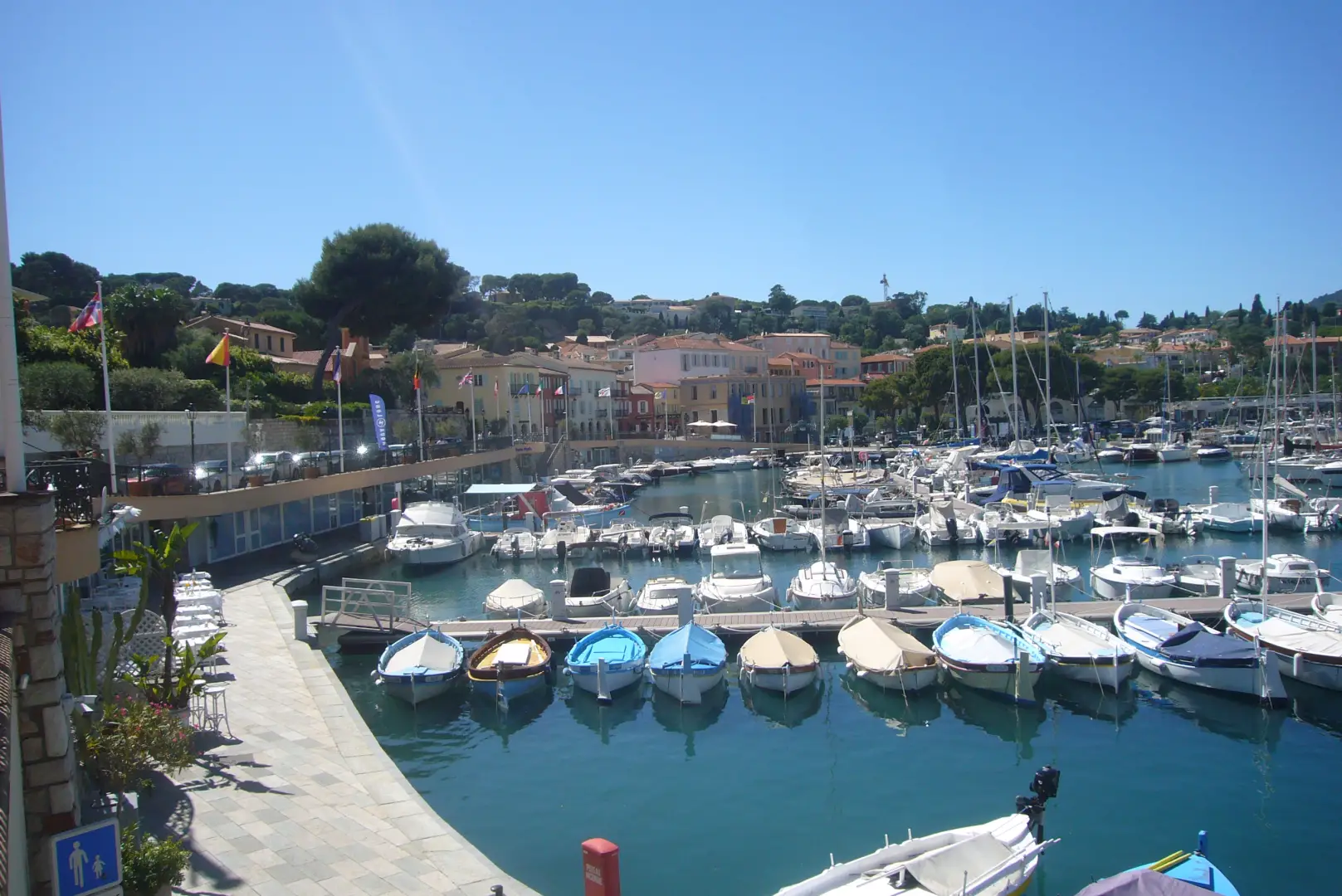
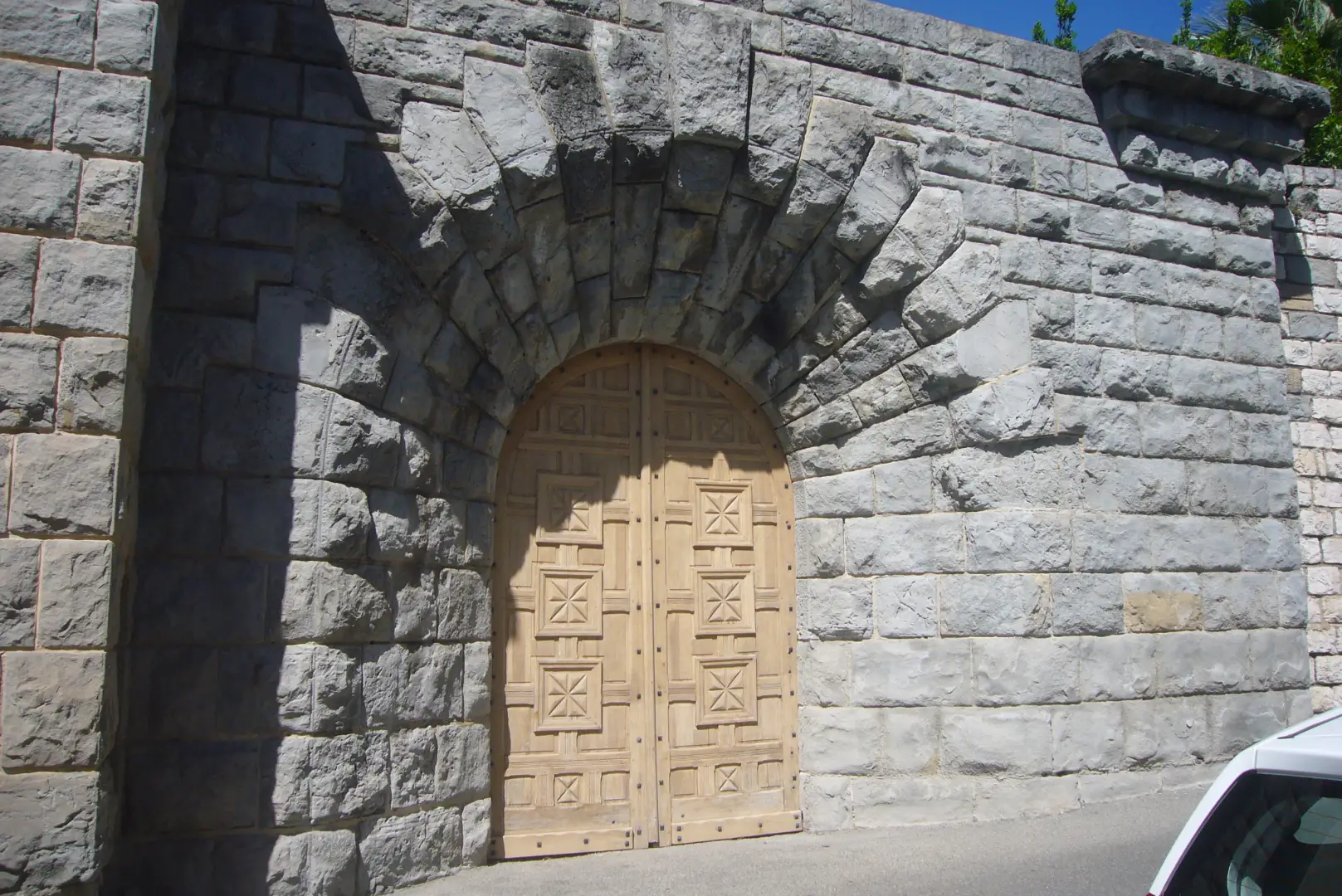
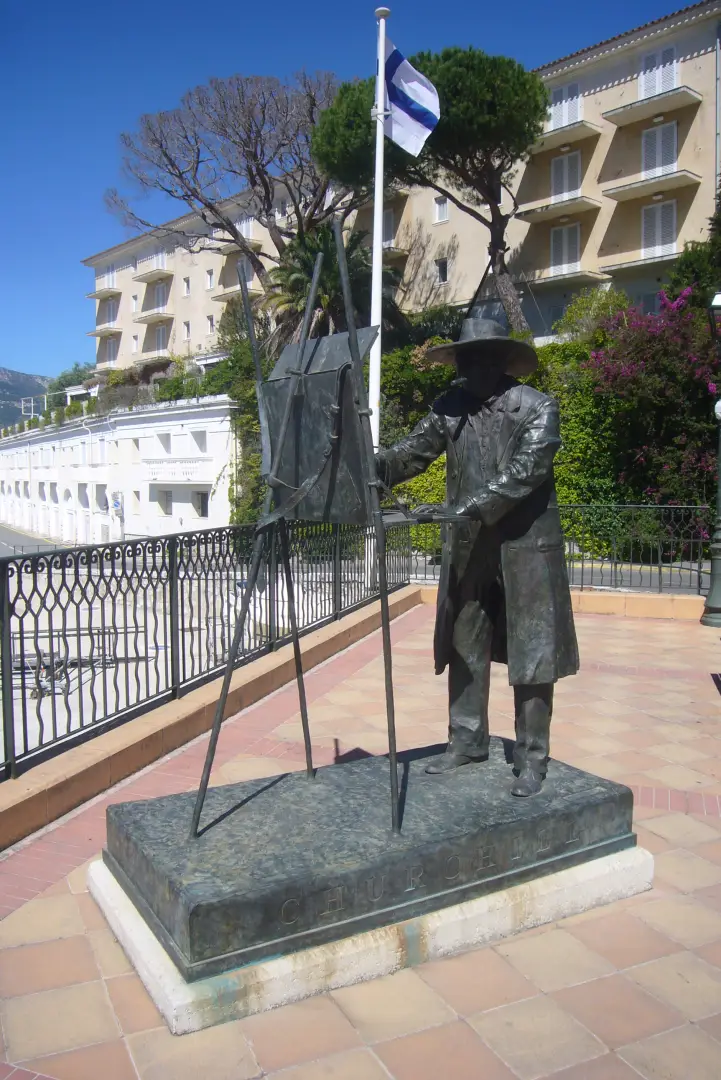
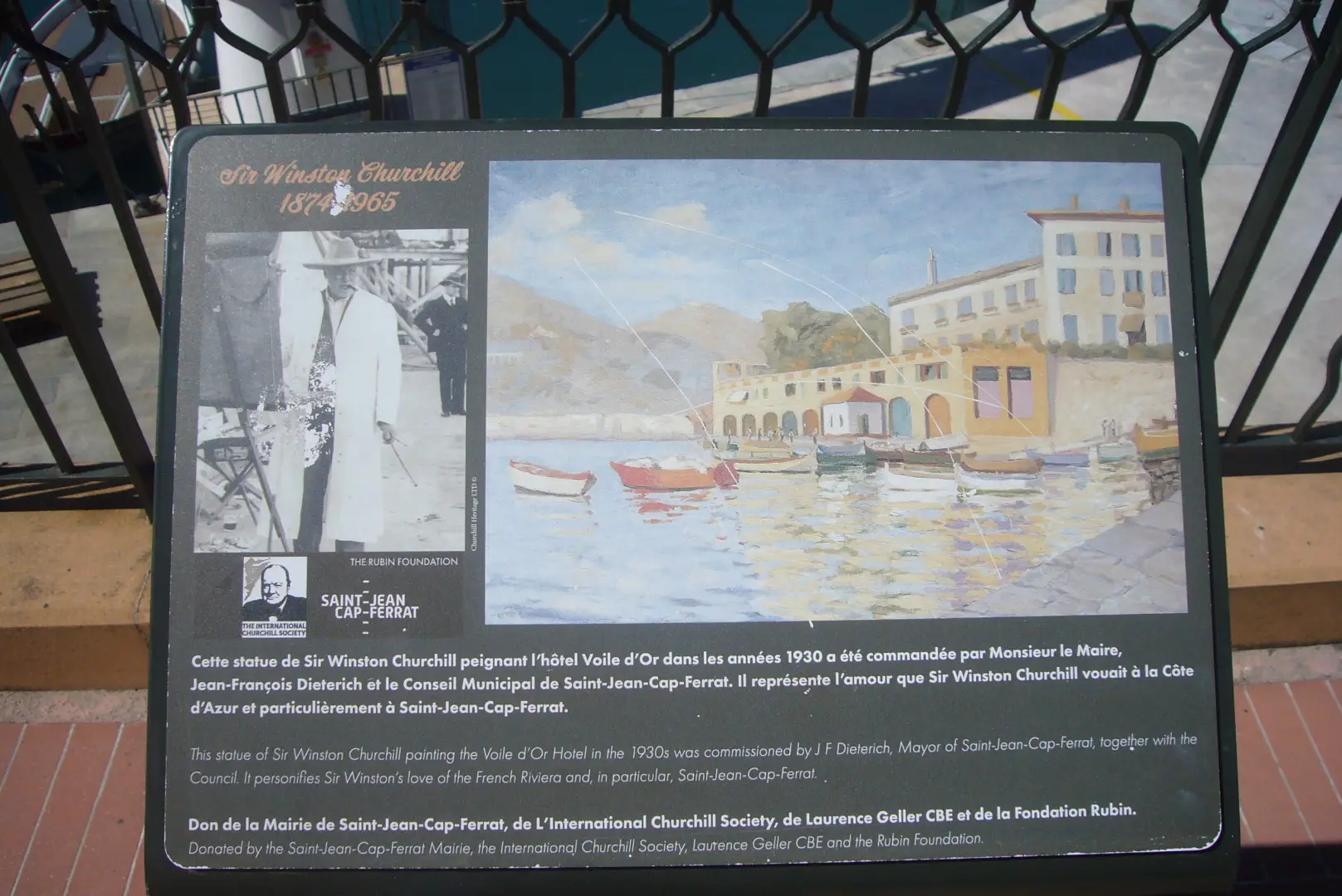
Back by the sea, we continue to the left, where a sign informs us that we are facing a marine sanctuary, that of Pelago, shared by Italy, France and the Principality of Monaco. Shortly afterwards, we’ll resume walking north-west, towards the village of Saint-Jean-Cap-Ferrat. This is the section of the path closest to the sea and can be slippery and battered by the waves. (photo 22). The ‘natural’ section ends at La Paloma beach (photo 23), which we walk the full length of until we reach a flight of steps that takes us, turning to the right, towards the village and its marina (photo 24). The only points of interest along this stretch are a fortress-style gate (photo 25) – all that remains of the villa built by Mr Singer, heir to the inventor of the sewing machine – and a monument to the British Prime Minister Churchill, who used to come here on holiday to paint (photos 26 and 27).
Once past the harbour, the path climbs about ten metres in altitude and joins a wide, flat promenade that leads to Beaulieu (photo 28). Along this stretch, we’d like to highlight Villa Fleur du Cap (photo 29), originally known as Lo Scoglietto, whose owners included theactor David Niven and where, in 1963–64, scenes from the Pink Panther films starring the famous British actor were shot.
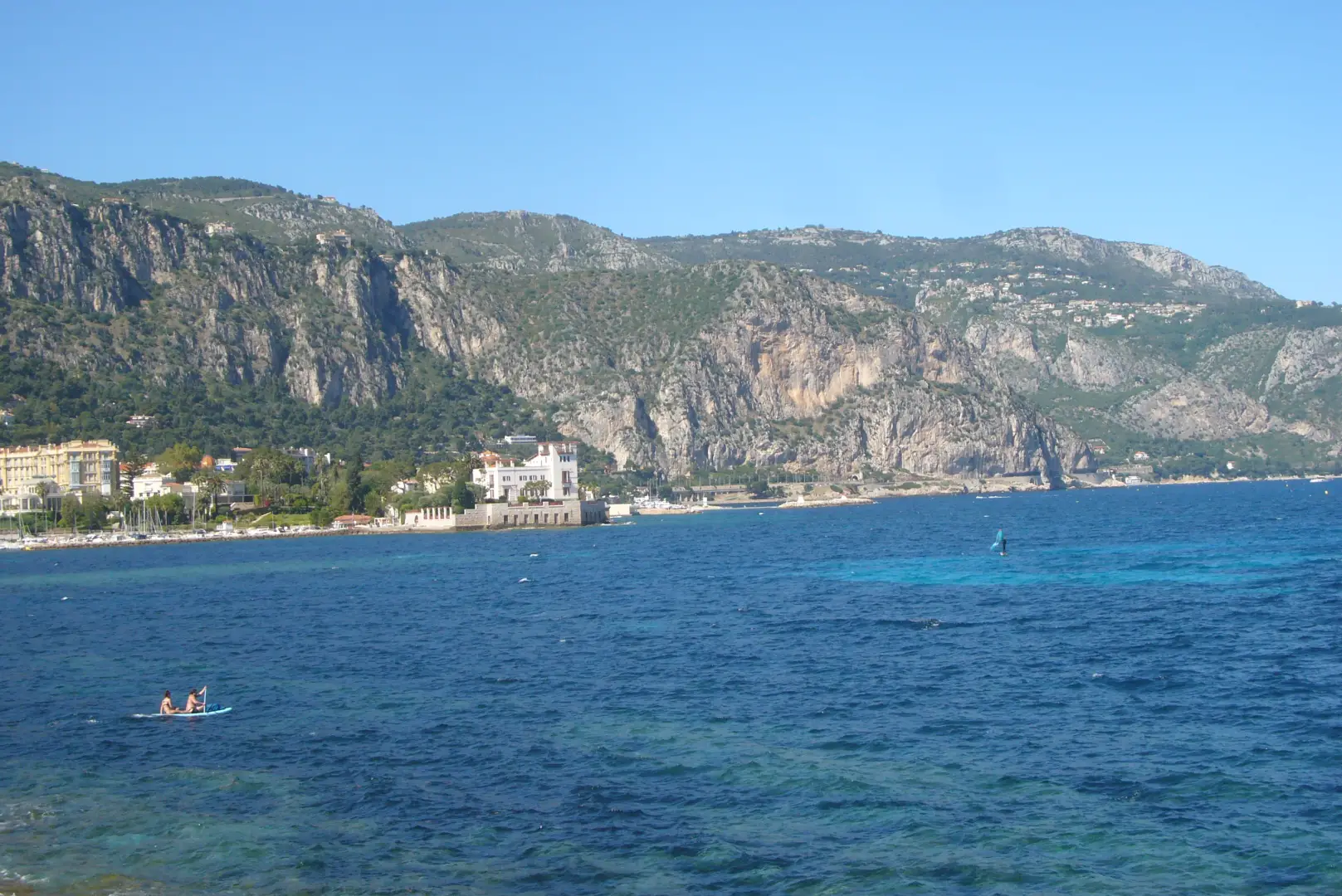
A glance at Baie des Fourmis allows us to see its opposite side, closed off by the famous Villa Kerylos (photo 30), theother ‘must-see’ in the area: a villa dating from 1902–08 designed to replicate the architecture of a patrician villa from the 1st century AD.
Photo gallery

Comments (0)
Sign in to leave a comment