Partisans' Chapel in Amay

Edited by:
Samantha Blanchod
Access
Introduction
The church can be reached by car and is easy to find because, being close to the road, it is very visible. As its name suggests, it was built in 1953 to commemorate a group of partisans who died in the area as a result of fascist reprisals. Near the church there is also a small cemetery in which some victims of World War II are buried.
Description
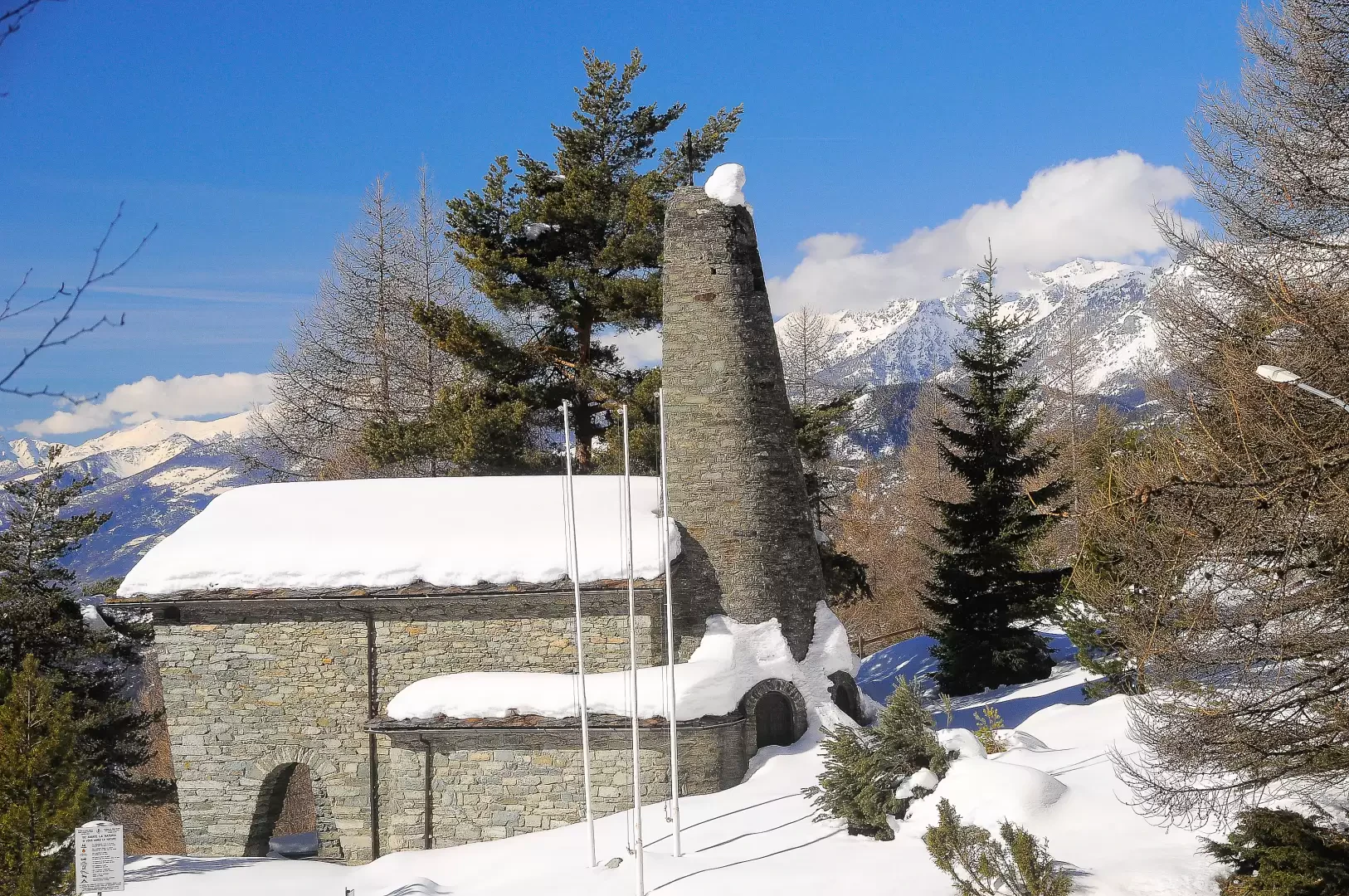
The church can be reached by car and is easy to find because, being close to the road, it is very visible. As its name suggests, it was built in 1953 to commemorate a group of partisans who died in the area as a result of fascist reprisals. Near the church there is also a small cemetery in which some victims of the Second World War are buried. The church was built using traditional building materials: the walls are made of stone, the roof is of the wooden gabled type with a covering of stone slates. However, the unusual shape given to the bell tower gives the church a modern appearance. The arches all around enliven the façades, making the whole more articulate, although the plan of the church is rather simple, rectangular in shape. In the driveway, a plaque has been placed in memory of Commander Page (the one who strongly wanted the church built) who rests inside with a partisan killed in Grun. Inside the park there is also a bronze plaque from 1995 commemorating the arrest in Amay and subsequent deportation of Primo Levi, Vanda Maestro and Luciana Nissim. The Remembrance Park around the church was only built at the end of the 1980s together with a car park for the cars of the many visitors. Every year on 7 September, the day of the patron saint of Amay, a procession leaves from the older church of San Grato to reach the new chapel and the cemetery in front of it.
The interior
The entrance door, consisting of six carved panels, leads to the interior, which consists of a single nave. The choir is round and is lit by three windows, one of which depicts St. George slaying the dragon. Particularly beautiful is the fresco painted in 1961 by Bulgarelli depicting a ball of fire with human figures around it and a rainbow with the inscription 'liberty'.
Information
Quota: m
Recurrences: -
Web: