
Edited by:
redazione
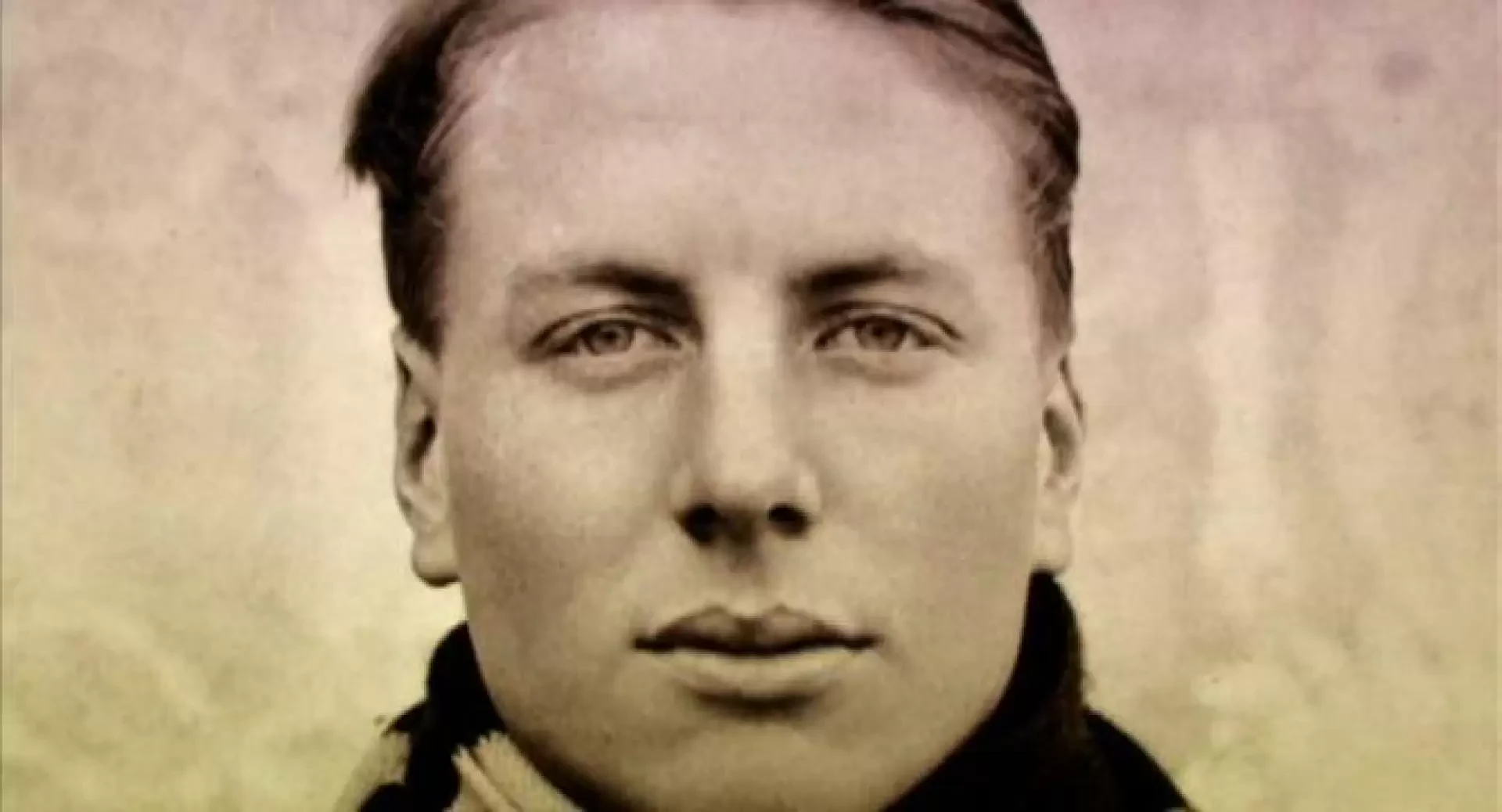
British mountaineer, the youngest member of the 1924 Everest expedition, who went missing on 8 June alongside George Mallory whilst attempting to reach the summit via the north-east ridge.
Personal details
Name: Andrew Comyn Irvine
Pseudonym / nickname: Sandy
Date of birth: 8 April 1902 - Birkenhead (England)
Died: 8 or 9 June 1924 - Mount Everest, North Face (Tibet)
Nationality: British
Occupation: engineering student
Biography
Andrew Comyn Irvine, known as Sandy, was born on 8 April 1902 in Birkenhead, Cheshire, one of six children of the historian William Fergusson Irvine and Lilian Davies-Colley. He studied at Birkenhead School and Shrewsbury School, where he distinguished himself through his early technical aptitude: during the First World War, he sent designs for a machine-gun synchroniser and a gyroscopic stabiliser for aeroplanes to the War Office.
He was, above all, a rower. In 1919, he won with theShrewsbury crew at the Henley Peace Regatta and, having entered Merton College, Oxford, to study engineering, rowed for Oxford in the 1922 and 1923 Boat Races – theonly one won by Oxford between 1913 and 1937. At Oxford, he also joined the university mountaineering club.
In 1923, he took part in Merton College’s Arctic expedition to Svalbard, led by George Binney, alongside Tom Longstaff and Noel Odell. It was Odell who put him forward for the British expedition to Everest the following year. Irvine set off from Liverpool on 29 February 1924 with George Mallory and other members of the team; at twenty-two, he was the youngest in the group and the least experienced at high altitudes. During the expedition, he modified the oxygen apparatus, making it lighter and more robust, and was responsible for maintaining the cameras, stoves and camp beds. This expertise played a part in Mallory’s decision; for the final attempt, he chose Irvine over Odell, a more experienced mountaineer.
On 8 June 1924, Odell, who had climbed up to provide support, spotted the two at 12.50 pm on a ledge of the north-east ridge – which he believed to be the Second Step – as they made their way towards the summit. It was the last sighting. Since then, the question of whether Mallory and Irvine reached the summit, twenty-nine years before Hillary and Tenzing, has remained unresolved, and the available evidence does not allow it to be settled.
Subsequent investigations have added new evidence without closing the case. In 1933, Percy Wyn-Harris found an ice axe at around 8,450 metres on the north-east ridge; in 1963, a mark carved into the handle was compared with that on a walking stick that had belonged to Irvine, and the ice axe was attributed to him. On 1 May 1999, the Mallory and Irvine Research Expedition found Mallory’s body at 8,156 metres, but not Irvine’s. In September 2024, a National Geographic team led by Jimmy Chin found, on the Central Rongbuk Glacier beneath the north face, a mountaineering boot with a foot inside and a sock bearing the label “A. C. Irvine”; the news was made public on 11 October 2024 and the remains were handed over to the Tibet Mountaineering Association, with the family agreeing to a DNA comparison. Neither of the two Kodak Vest Pocket cameras which, according to Irvine’s diaries, the party had been carrying, was ever found.
Mountaineering expeditions
Svalbard – 1923 – Merton College Arctic expedition led by George Binney, with Noel Odell and Tom Longstaff (Norway, Svalbard archipelago)
Everest (8,849 m), north-east ridge – 8 June 1924 – summit attempt with George Mallory; Noel Odell last sighted at 12:50; outcome unknown (Tibet, Himalayas)
Bibliography
As a writer
no critical study of Irvine’s diaries found
As a key reference
Peter Firstbrook, Lost on Everest, 1999
Tom Holzel, Audrey Salkeld, The Mystery of Mallory and Irvine, updated edition 1999
Julie Summers, Fearless on Everest: The Quest for Sandy Irvine, 2000